

Recap: Rail Summit Explores the Future of Passenger & Freight Rail in the Northwest
Since 2023, the PNWER Regional Infrastructure Accelerator has co-hosted an annual gathering of regional rail leaders as part of our High Performance Rail initiative. Bringing together railroads, ports, shippers and producers provides an incredible chance to advance the regional freight network and identify challenges and opportunities facing our critical rail infrastructure. Having passenger and freight rail advocates, state DOTs, Amtrak and federal officials also join the gathering helps to further integrate the many users of our rail system and support a coordinated and strategic approach to the movement of people and goods across the Pacific Northwest.
The Big Sky Passenger Rail Authority co-hosted this year’s event in Helena, Montana. Highlights included an opening reception in the beautiful Montana State Capitol Rotunda, three days of sessions in the new Montana Heritage Center and keynote speakers, including U.S. Senator Tim Sheehy and Surface Transportation Board (STB) member Karen Hedlund, among others.
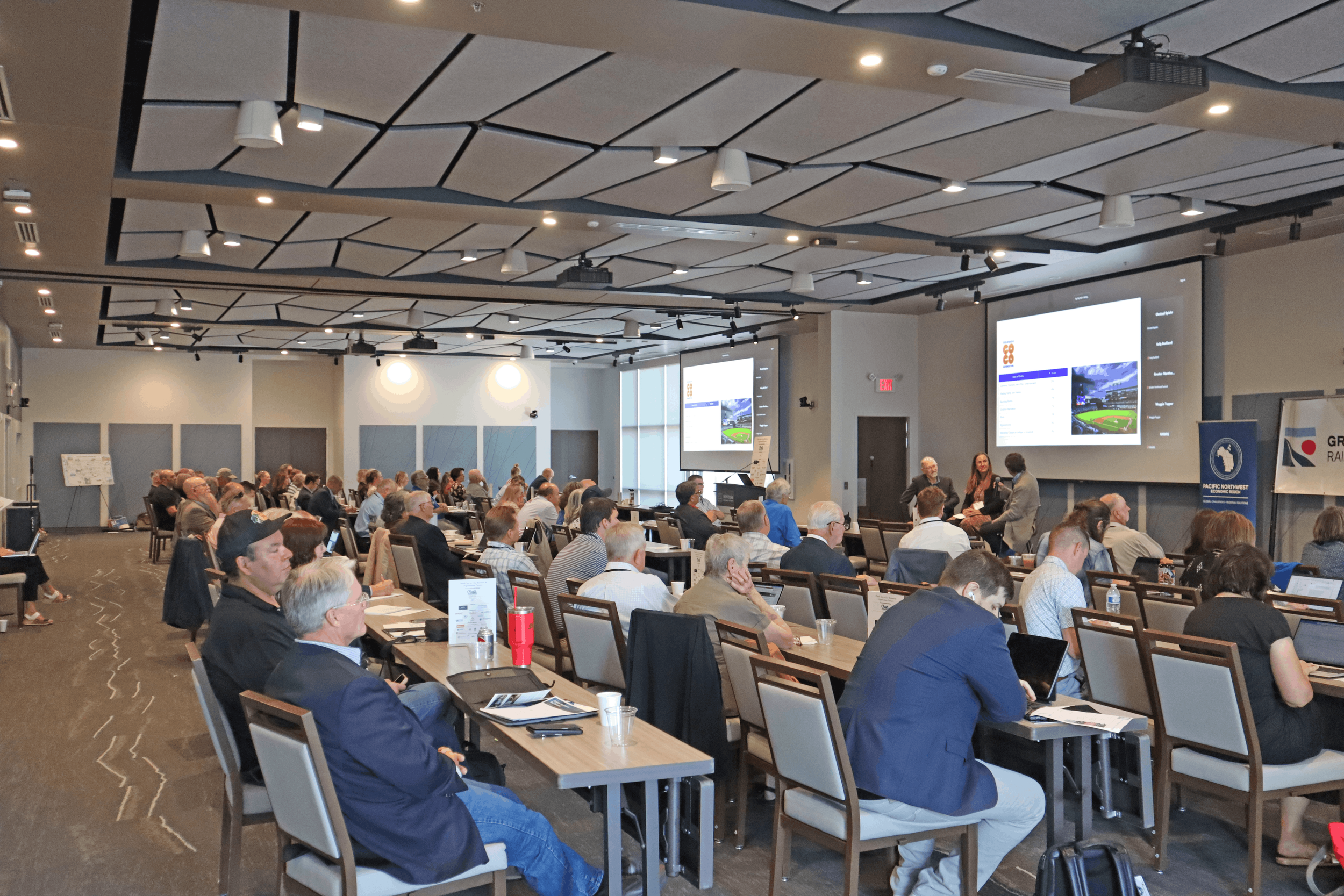
Attendees listen to a panel in the Montana Heritage Center.
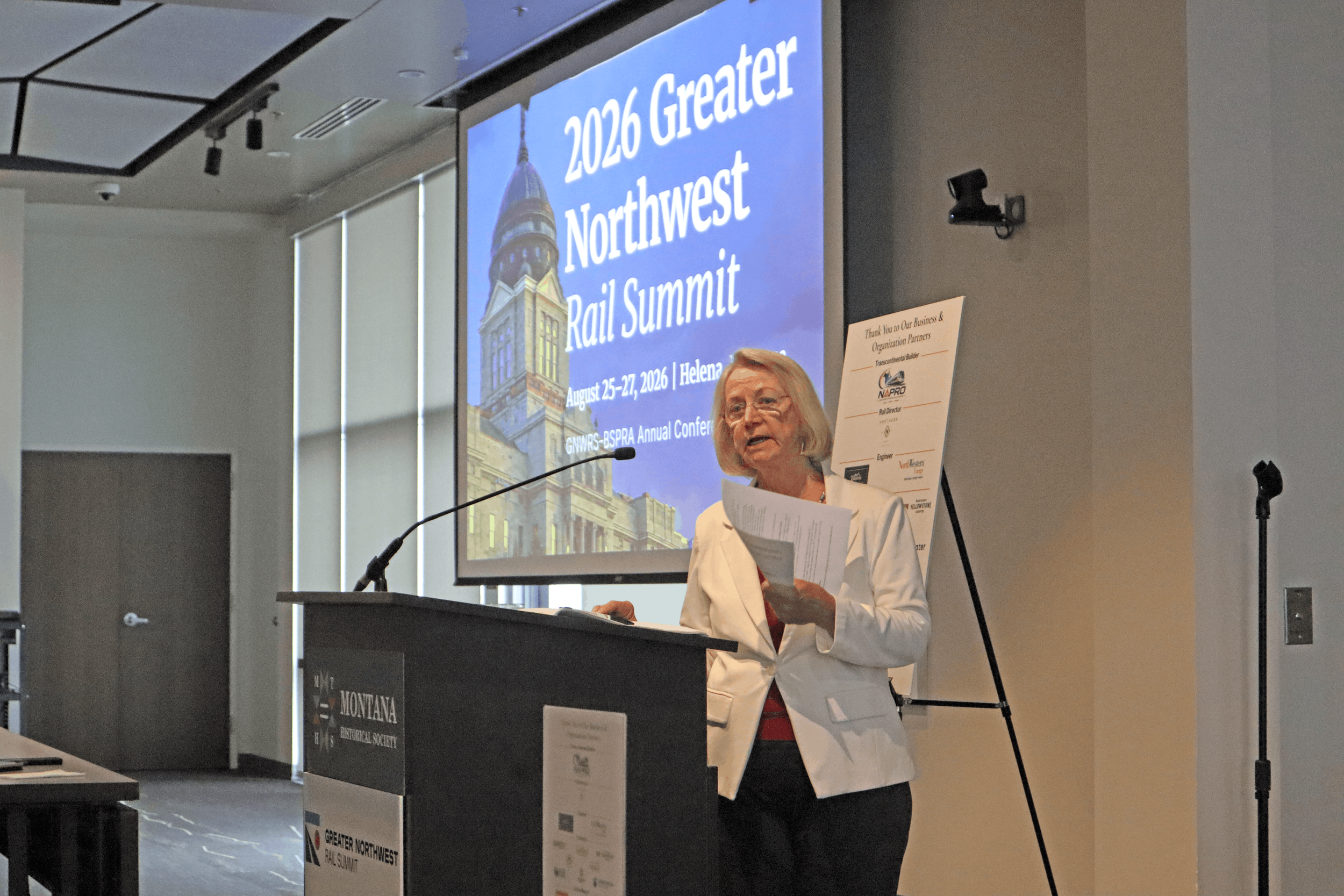
Karen Hedlund delivers keynote remarks.
Local Advocacy Meets Federal Strategy
This year’s agenda covered discussions from the local to the national level. Several notable speakers joined us from Washington, D.C., including a contingent from the USDOT, as well as experienced leaders from Colorado, Alabama and across the Big Sky North Coast corridor stretching to Chicago.
National Policy
The event kicked off with Rail Passengers Association VP of Government Affairs & Policy, Sean Jeans-Gail, and the Eno Center for Transportation VP of Policy, Rebecca Higgins, sharing insights on the federal surface transportation reauthorization bill and what it means for rail funding and policy. Speakers noted the current version of the bill includes no advance appropriations for Amtrak or any discretionary grant programs, which is a departure from the sizable investment guaranteed under the Infrastructure Investment and Jobs Act of 2021.
Michael Rutherford, Assistant Secretary for the Office of Multimodal Freight Infrastructure at the USDOT, spoke to the role of freight rail in the 2026 National Freight Strategic Plan. Alongside him, Special Advisor to the Under Secretary for Policy at the USDOT, Michael Giordano, introduced a new USDOT initiative: America’s Great Corridors of Commerce. Announced the same day as the Rail Summit, this new initiative will establish public–private partnerships to site utility infrastructure in railroad and highway right-of-ways. With the CEO of the Montana Trucking Association, Duane Williams, moderating the panel, the opportunity to develop a multimodal corridor of commerce that stretches across the northern tier of the country was top of mind.
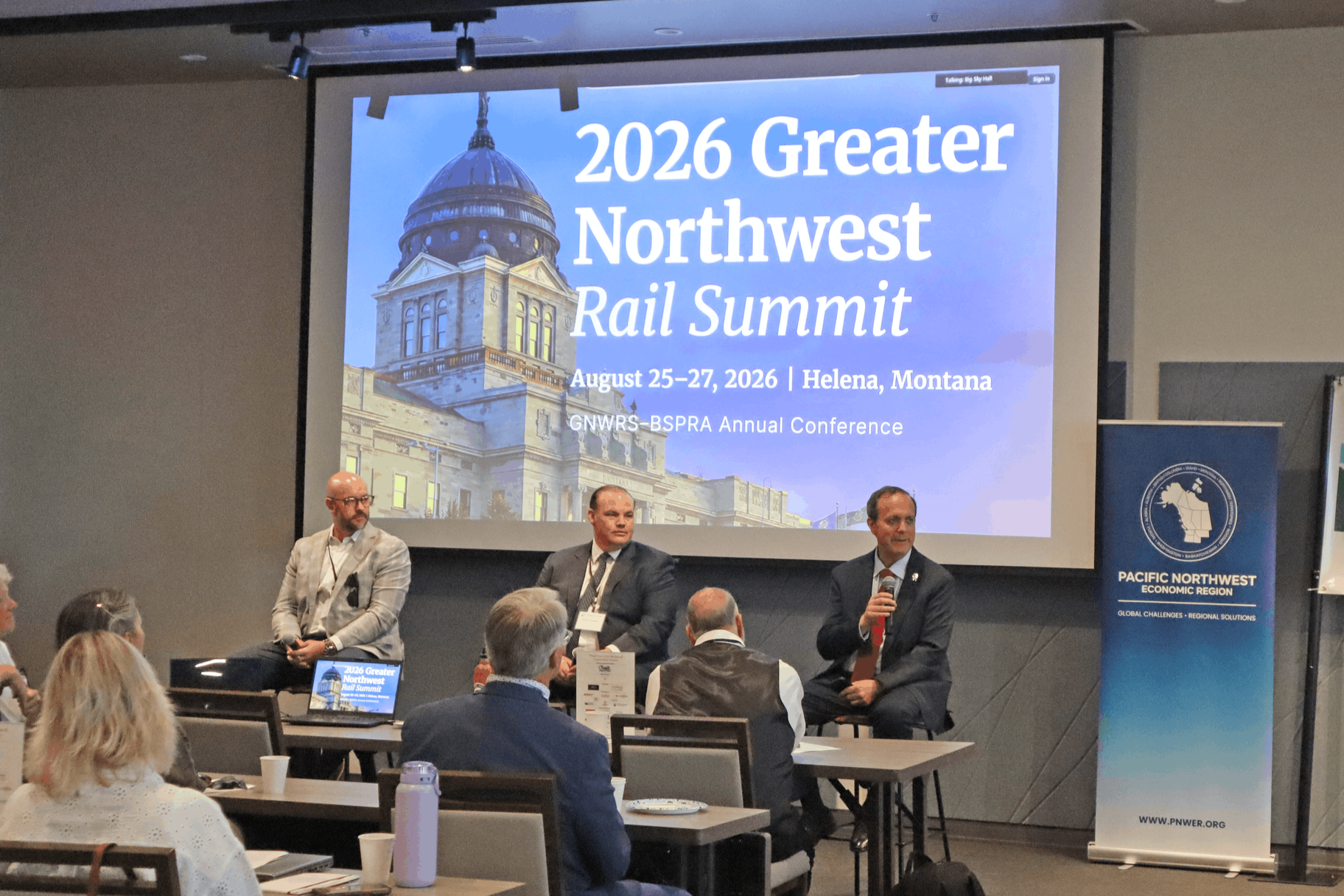
L-R: Will Resch, Michael Giordano, Michael Rutherford.
The Passenger Rail Renaissance and Manufacturing Resiliency
U.S. Senator for Montana Tim Sheehy overviewed opportunities for expansion of passenger rail in the U.S., citing American railroad law that gives us a remarkable legal foundation and linear right-of-way for economic prosperity.
Both freight and passenger rail were covered, as Sen. Sheehy noted that supply chains can often be optimized for efficiency, rather than resiliency. Rail is critical for resiliency in our nation’s transportation ecosystem.
He pointed to the added safety provided by passenger rail in Montana, allowing citizens to travel during difficult weather conditions. He added that we need expanded rail for imports and exports in Montana to get our goods to global markets – wheat from the Highline, knives from Bozeman and fly fishing from Helena.
“I think tourism is the greatest justification for [passenger rail]. They’ll want to experience both the natural beauty of Montana but also see our incredible small towns around the state,”
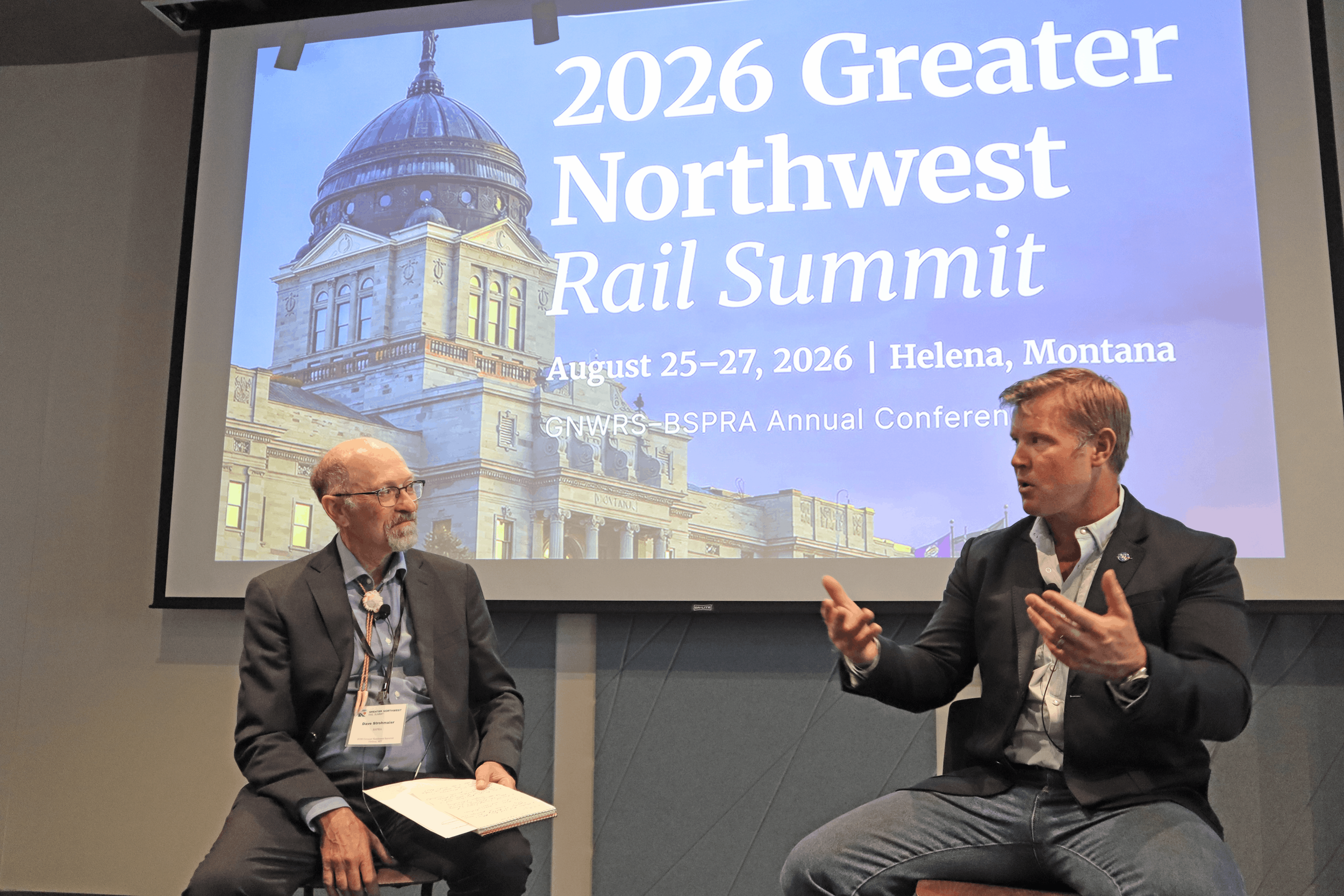
In pointing to a rail renaissance, Sen. Sheehy noted air service deterioration and the closing of many airports, which squeezes more planes into limited real estate. Expanded passenger rail provides a great alternative.
Sen. Sheehy recognized that rail investment is a bi-partisan issue uniting the country. He serves on Commerce and Armed Services committees and noted the upcoming reauthorization of the surface transportation bill and defense nexus for dual-use infrastructure opportunities.
Successes from Across the Network
Throughout the Rail Summit, we heard updates and insights on passenger rail lines around the region. The Big Sky Passenger Rail Authority shared the latest on its efforts to restore passenger rail to the Big Sky North Coast corridor between Seattle and Chicago, via southern Montana and North Dakota. The Minnesota and Wisconsin DOTs shared updates on the better-than-expected ridership numbers on the Borealis, Washington and Oregon DOTs shared updates on the new Airo trainsets coming to the Amtrak Cascades, and we also heard about the Province of Alberta’s 30-year plan to build a high speed rail line between Calgary and Edmonton.
From Colorado, John Putnam, the Chair of the Front Range Passenger Rail District, shared updates on the proposed CoCo (Colorado Connector) and his advice for advocates in the Northwest. With strong support from the governor, state DOT and residents across the state of Colorado, the Front Range is a leading example of passenger rail restoration in the Mountain West. From the Gulf Coast, we heard about the success of the Mardi Gras line. David Clark, CEO of Visit Mobile, shared how local chambers of commerce helped advance the restoration of the Mardi Gras and contribute to its success.
Public-Private Partnerships in the Rail Industry
The last session of the Rail Summit crystalized the principles of our High Performance Rail initiative for freight, passengers and communities.
Amtrak Board member Elaine Clegg was joined by senior executives French Thompson from BNSF Railway and Katie Novak from Union Pacific in the session moderated by Washington House Transportation Committee Chair Jake Fey.
The focus was partnerships between Amtrak, Class I railroads and state-supported passenger rail to accommodate growing freight rail traffic and expanded passenger service while enhancing community safety. A comparison was made with highways, where trucks share the road with personal vehicles, accommodating supply chains for goods movement.
An example of this type of partnership is the coordinated support for projects in Malta, MT and Havre, MT that leverage federal rail grants with Amtrak’s and BNSF’s investments.
Viewing freight and passenger rail as an integrated, holistic system is essential to ensure safety and efficiency of both. As Thompson noted, routine analysis of passenger train velocity is critical in understanding how freight trains will move along the shared corridors.
Key concerns raised include increased insurance costs that jeopardize expansion of passenger rail, and the lack of advanced congressional appropriations for discretionary federal rail grant programs.
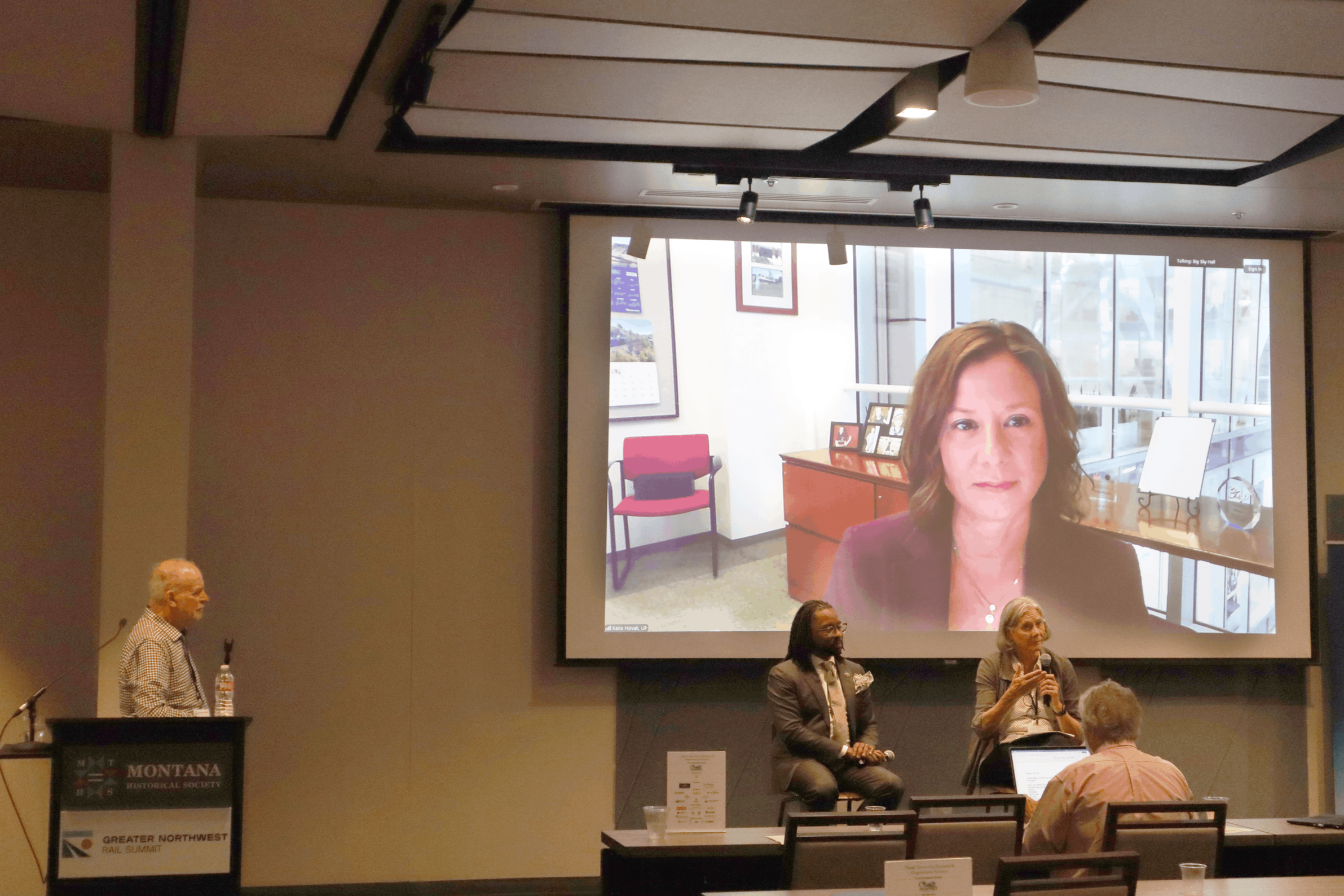
L-R: Rep. Jake Fey, French Thompson, Katie Novak (on Zoom), Elaine Clegg.
Local Action and Regional Coordination
Throughout the sessions, local leaders spoke about how they’re working with partners at the regional level. Rail terminal operators, including the Northwest Seaport Alliance, the Port of Quincy and Tri Cities Intermodal, shared their perspective on the rail network and how more freight can be moved by rail. From the Oregon DOT’s POINT Bus Service to MTR Western’s private coach operations, presenters discussed how effective passenger rail service requires first- and last-mile transit connections. Conversations brought to light the rail industry’s regional labor challenges, both in production, as well as operations and maintenance.
Building consensus among the many rail interests in the Pacific Northwest takes time, but the Rail Summit showed that there is precedent for it and momentum. It was mentioned several times that the Summit is a great forum to build momentum for improved rail infrastructure - through events like the Summit we can have a shared understanding of how people and goods can be efficiently moved on steel wheels.
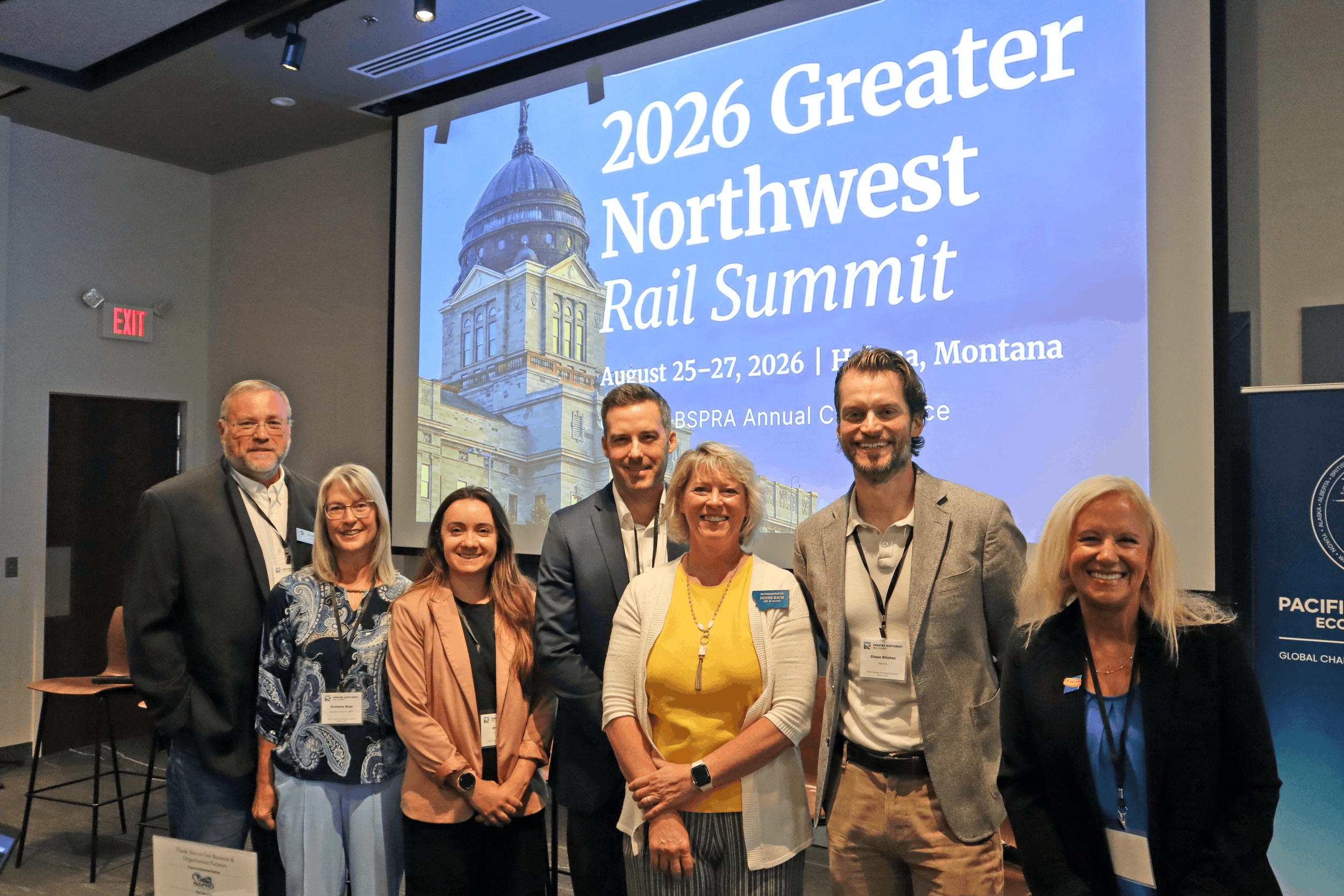
L-R: Alan Adolf, Kim Riepl, Bre Brush, Ross Lane, Rep. Denise Baum, Chase Kitchen, Rep. Mari Leavitt.
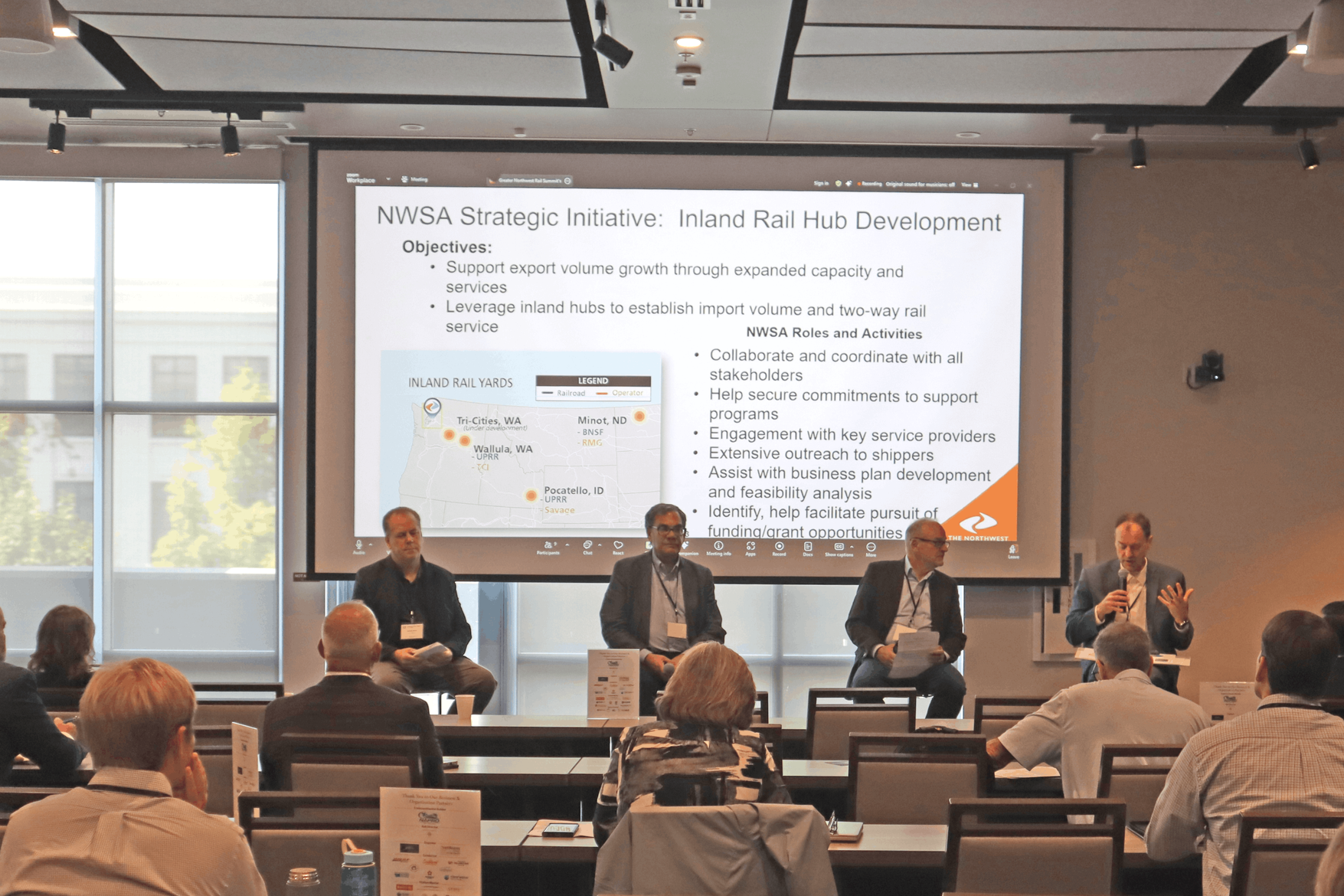
L-R: Patrick Boss, Ted Prince, Rep. Jake Fey, Steve Balaski.
Keep in Touch!
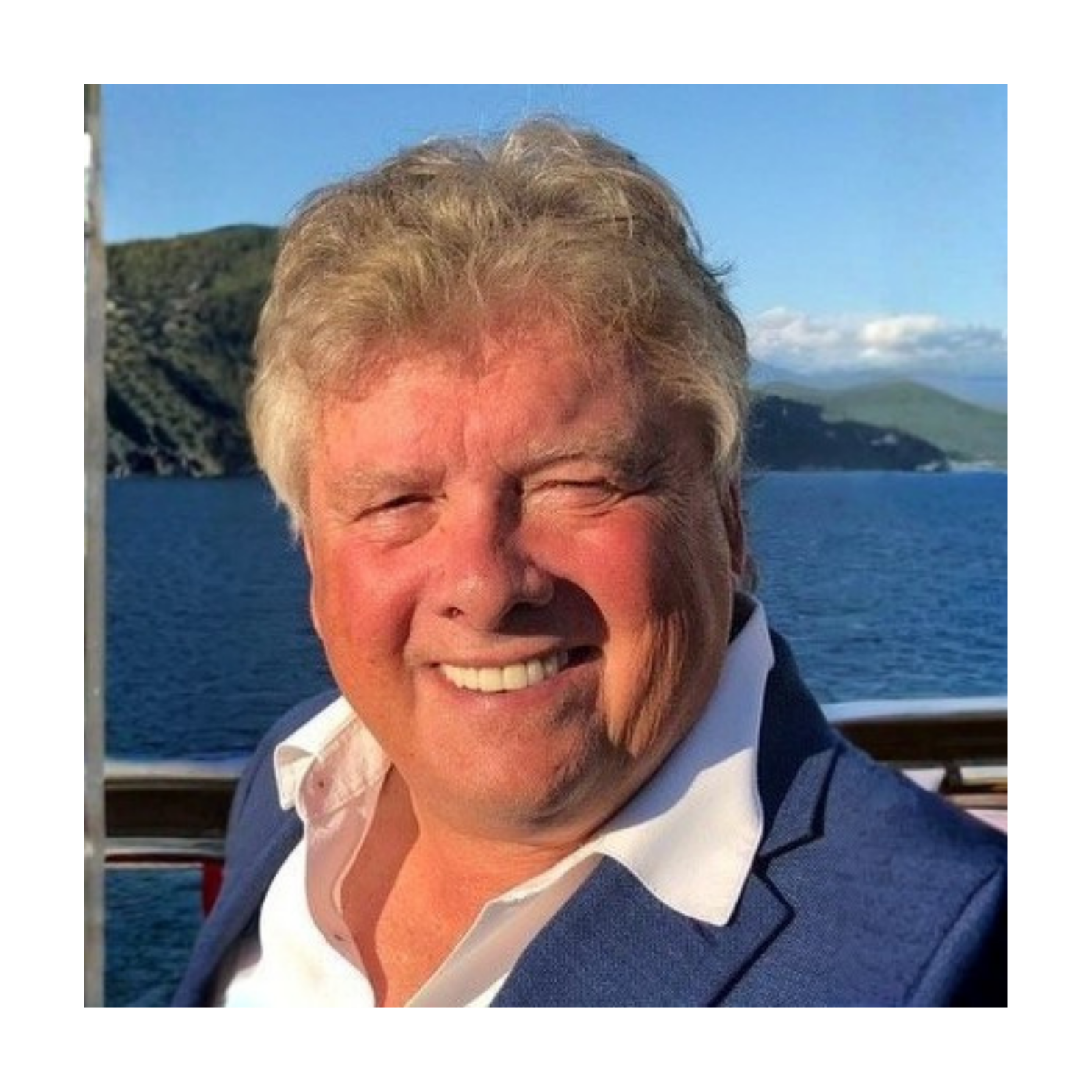
Bruce Agnew
Tom Lang

Hannah Meister