Better Together - The Ties that Bind Policy Tour
Recapping the Puget Sound Policy Tour
Washington and Alaska are connected by one of the nation's most vital maritime partnerships. The integrated economies support jobs and small businesses, strengthen ports, shipyards and Arctic security, and help to ensure the reliable movement of people and goods.
PNWER’s USDOT Build Northwest Accelerator hosted a two-part Better Together – Ties That Bind policy tour designed to strengthen cross-state collaboration and deepen understanding of the regional partnerships that connect Alaska and Washington.
In April, we hosted a delegation of Washington legislators and port commissioners in Alaska for an immersive look at the maritime infrastructure, industries and partnerships that support this vital regional relationship. Part two of the tour, hosted in early September, provided Alaskan legislators with the same opportunity to travel to Washington, experience the state’s maritime infrastructure and industries firsthand and engage with the leaders and partners who help drive our shared regional economy.
Together, the two tours highlight the strong ties between Alaska and Washington and the value of learning from one another, building relationships and identifying opportunities to work better together.
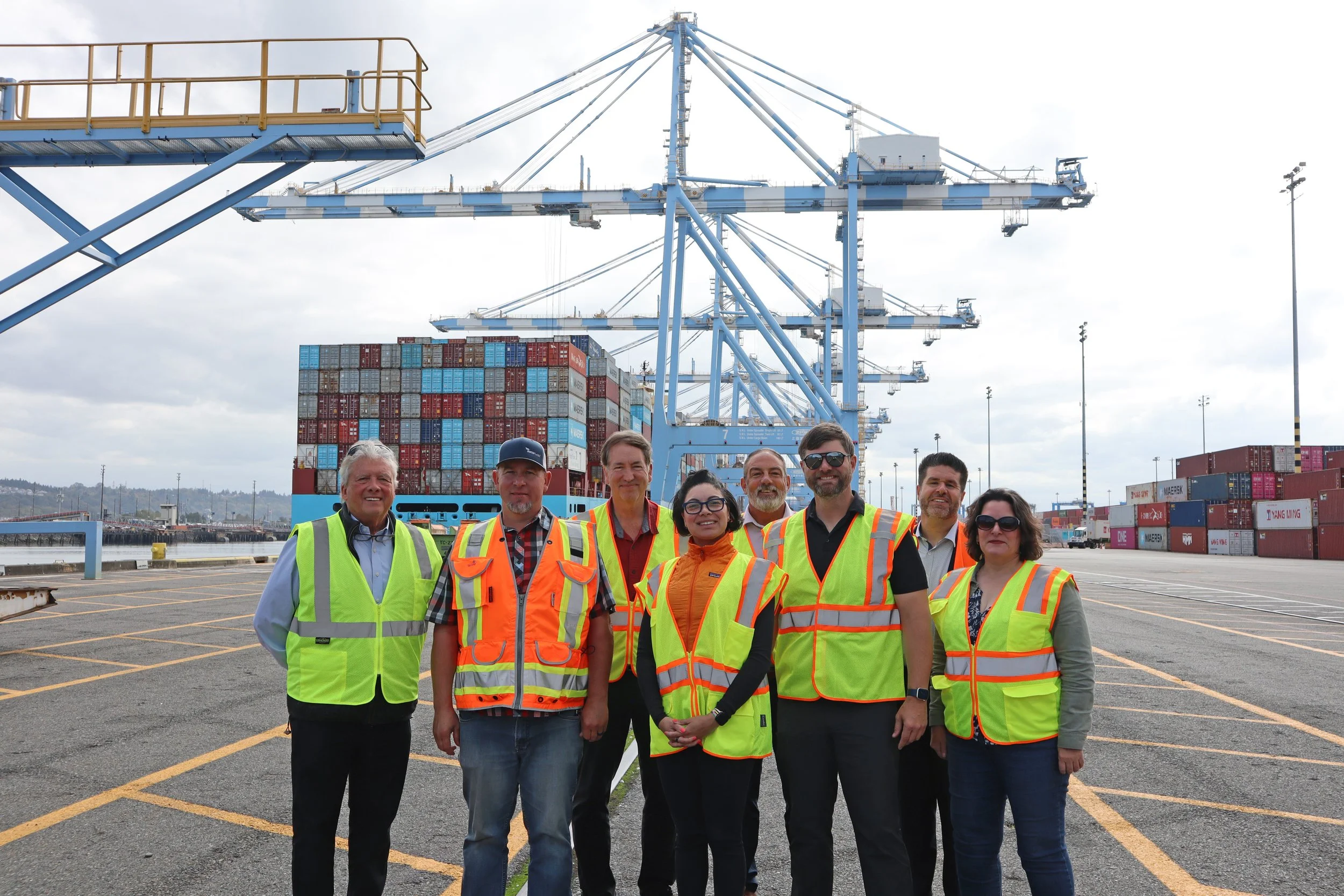
The delegation stands at the Port of Tacoma cargo terminal before heading to their crane tour.
L-R: Bruce Agnew, Rick Atkinson, Robert Venables, Senator Löki Gale Tobin, Terry Umatum, Senator Jesse Bjorkman, Jeff Brubach and Laura Achee.
These tours reflect the relationship represented in the Seattle Metropolitan Chamber of Commerce’s 2015 report, Ties That Bind. The report highlighted the critical economic connections and mutual benefits linking Puget Sound and Alaska through trade, transportation, tourism, energy and regional collaboration.
We were joined on visits by leaders from the Seattle, Tacoma and Alaska chambers of commerce, all three of which will be working to develop an updated report. The results of our policy tours will be shared with them with a strong recommendation to support future tours of state legislators, congressional staff, port, industry, tribal and labor leaders.
The delegation included port and transportation policymakers from Alaska:
Senator Jesse Bjorkman – Chair, Senate Transportation; Chair, Senate Labor & Commerce; Vice Chair, Senate State Affairs
Senator Löki Gale Tobin – Chair, Senate Education; Vice Chair, Senate Transportation
Senator Jesse Kiehl – Vice Chair, Senate Judiciary; Member, Senate Finance
Terry Umatum – Port Director, Port of Alaska
Christy Terry – Vice President of Real Estate, Alaska Railroad; former Mayor of Seward; Seward Chamber Board Member; Seward Port Commerce Board Member
Robert Venables – Executive Director, Southeast Conference
Laura Achee - Legislative Aide, Office of Senator Jesse Bjorkman
Stephanie Bowman – Vice President, U.S. West Coast Operations, Transportation Institute
Xochitl Castañeda - Director, Pacific Northwest & Alaska Gateway Office, MARAD
Through engagement with industry leaders, policymakers, and maritime partners, our delegation gained firsthand insight into the shared opportunities and challenges facing the maritime supply chain and related economic and environmental ties. The tour reinforced the importance of strategic collaboration and forward-looking investments that will expand economic opportunity, strengthen regional connectivity and ensure Washington and Alaska remain leaders in a resilient, innovative and globally competitive maritime economy.
Inside the Pacific Northwest’s Maritime Lifeline
The Alaska-Washington Supply Chain
Within the broader supply chain, Puget Sound ports serve as critical gateways to Alaska. At the Port of Anacortes, we learned how large fabricated pilings will be shipped by barge to Anchorage to support the Don Young Port of Alaska Modernization Project. The neighboring Marathon Anacortes oil refinery uses a share of crude oil from Alaska’s North Slope delivered to Washington state refineries – a critical energy link to our transportation systems.
Billions of dollars in cargo and supplies move through the Northwest Seaport Alliance at the Ports of Tacoma and Seattle via ocean freight shipping companies like TOTE Maritime and Matson, before heading north to communities along the Rail Belt via Alaska Railroad. Additionally, Lynden Alaska Marine Lines and Crowley serve communities, ports and native villages throughout southeast, central, western and northern Alaska from their Seattle terminals in the Duwamish Waterway and Harbor Island.
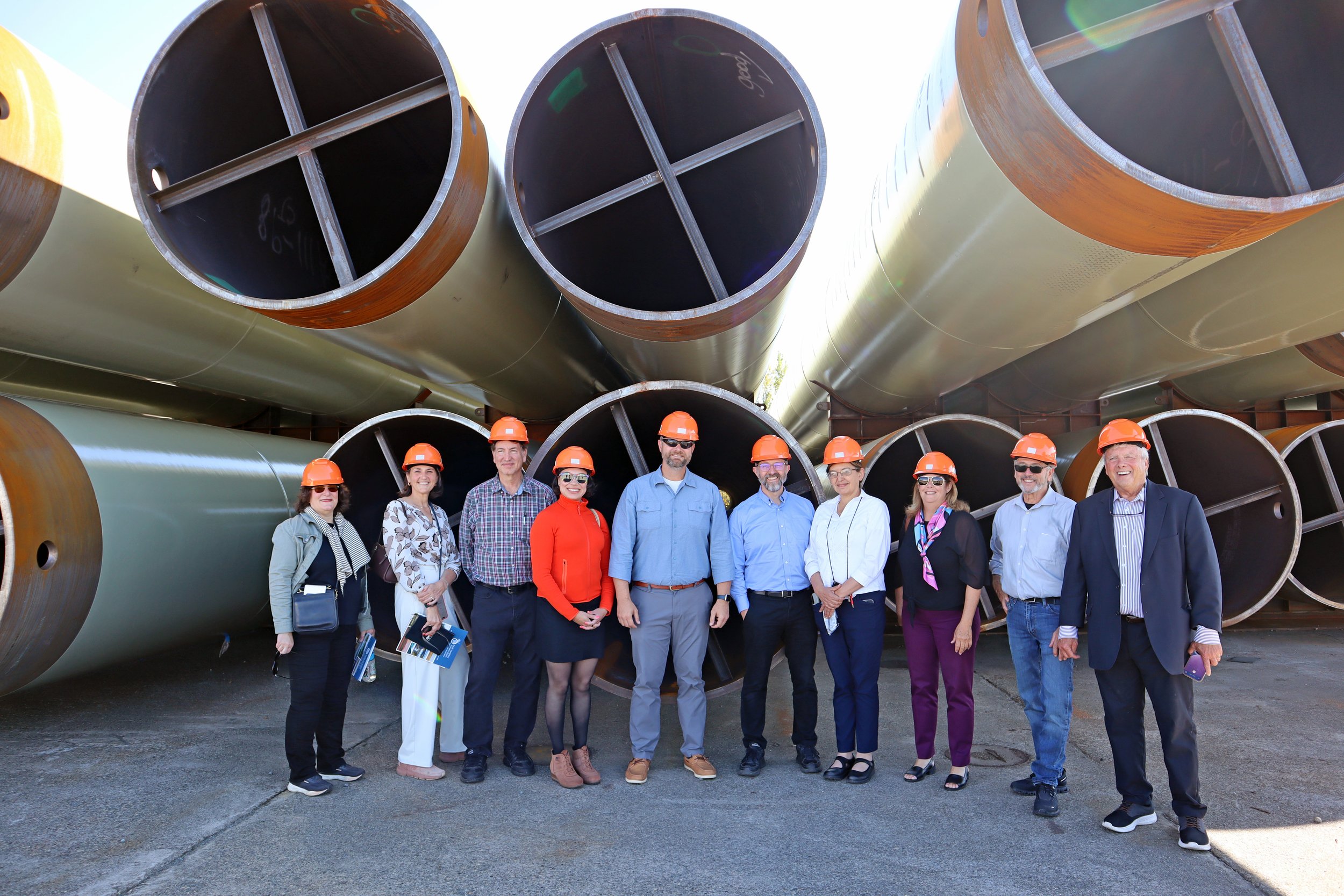
The delegation poses in front of large pilings destined for the Don Young Port of Alaska as part of its Modernization Project.
L-R: Laura Achee, Christy Terry, Robert Venables, Senator Löki Gale Tobin, Senator Jesse Bjorkman, Senator Jesse Kiehl, Xochitl Castañeda, Stephanie Bowman, Commissioner Fred Felleman and Bruce Agnew.
“The thing that stood out most to me during the PNWER trip was just how directly decisions made in Washington and at Puget Sound ports affect the cost of living in Alaska and the availability of goods that Alaskans and our industries rely on every day.
I’m thankful for opportunities like this PNWER trip that allow legislator to build relationships and better understand how closely our economies are connected. On future visits, I hope we can build on those relationships and identify practical ways to reduce costs, improve efficiency, and strengthen the supply chain between Alaska and other PNWER members.”
Cruise Connections
Cruise connections are a vital part of the broader maritime economy, strengthening the tourism relationship between Alaska and the Pacific Northwest. The Alaska delegation received a briefing from the Port of Seattle, with support from Cruise Lines International Association (CLIA), on the Pacific Northwest to Alaska Green Corridor (PNW2AK) and efforts to advance more sustainable cruise operations across the region. In 2025, cruise operations brought 1.7 million visitors to Alaska, generating an estimated $2.1 billion in economic activity in Alaska and $2.9 billion in Washington.
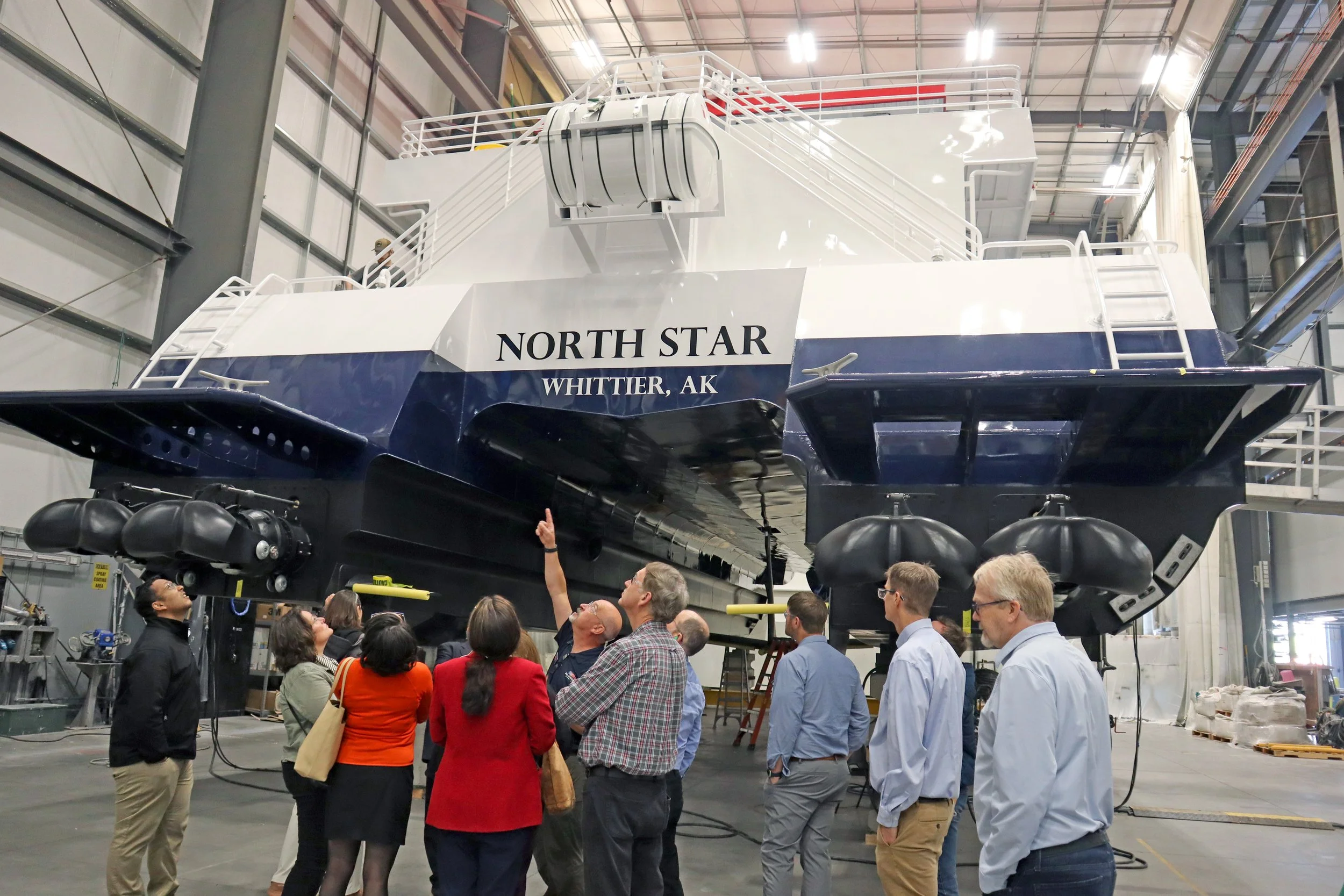
All American Marine President Ron Wille explains the process of building the North Star.
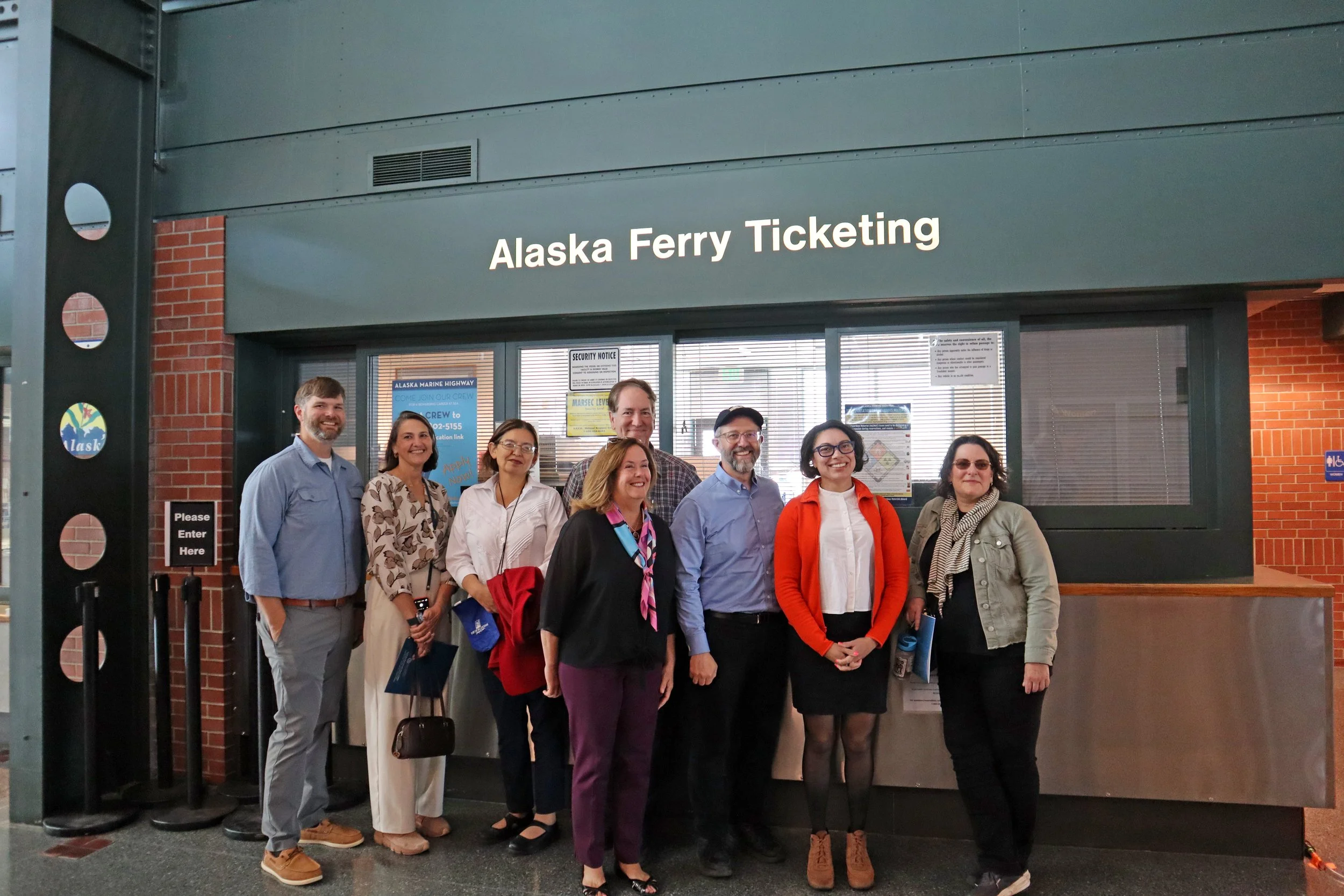
The delegation stands outside the Alaska Ferry ticketing booth at the Bellingham Cruise Terminal.
“Alaskans know that the Puget Sound supply chains are critical to our existence and economic prosperity, but few understand the intricacies and dynamics that make those supply chains happen. Having the opportunity to walk through the ports, meet with the operators and policy makers was eye-opening and brings a deeper appreciation for the partnership Alaska shares with the Puget Sound port communities. The connection is especially important to Southeast Alaska, not only for the freight component but as the national highway connection for the Alaska’s ferry system.”
The transition to shore power is creating new opportunities for communities to benefit directly from cruise activity. The first three ports in the world to provide shoreside power for cruise ships were all in the Pacific Northwest: 1. Juneau, 2. Seattle and 3. Vancouver, BC. In Juneau, electricity purchased by cruise ships can be credited back to local residents through their electric bills, creating a direct economic benefit while supporting cleaner port operations.
In Bellingham, we visited the Bellingham Cruise Terminal, the southern terminus of the Alaska Marine Highway system. The service provides ferry transportation for passengers, vehicles and freight to coastal communities. The terminal connects travelers to the airport, rail, intercity buses and local transit. It is owned and operated by the Port of Bellingham.
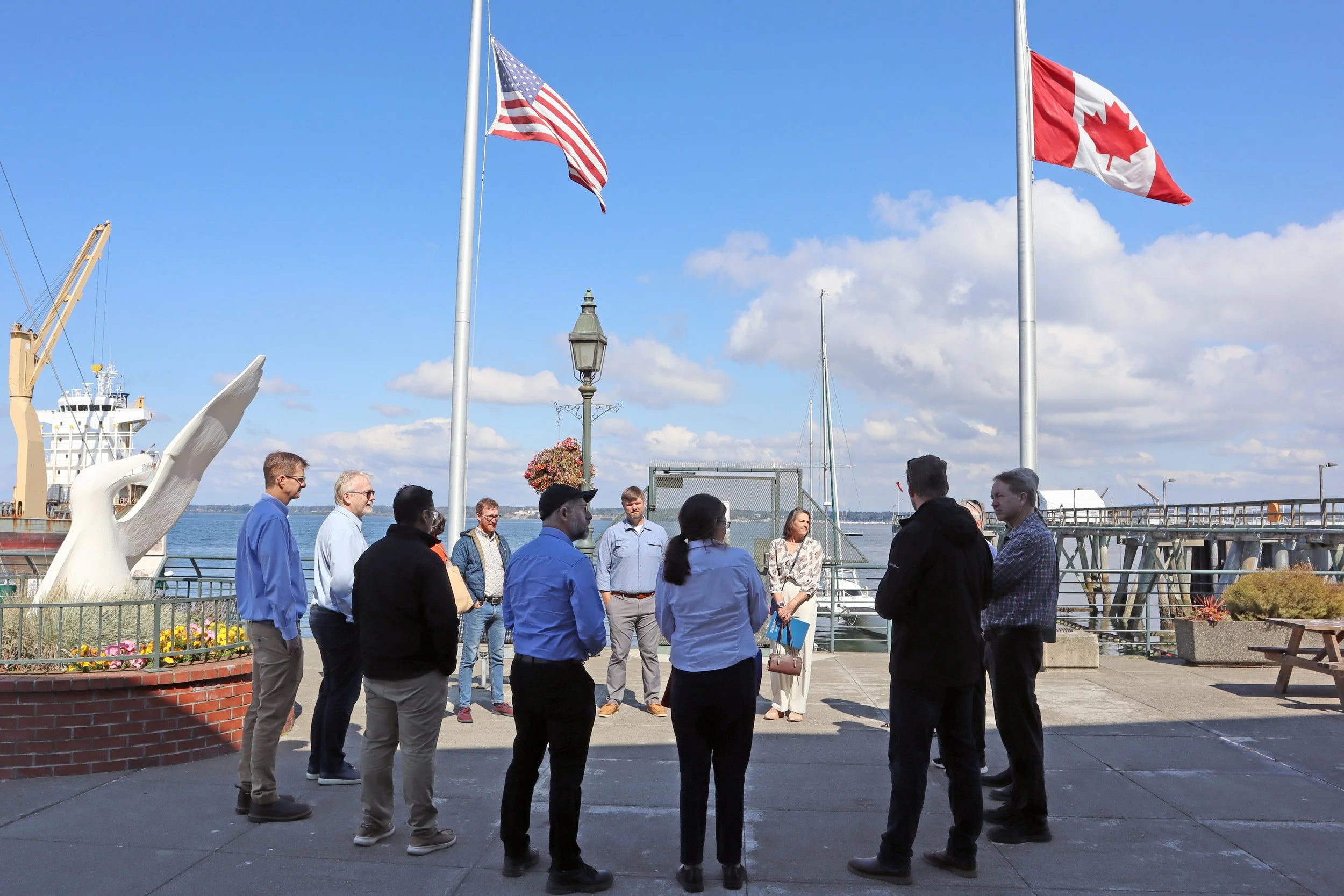
Port of Bellingham staff brief the delegation on cruise operations.
Maritime Workforce Development
Government and industry is investing in workforce training programs to accelerate shipbuilding and ship repair for commercial and public purposes as well as national defense. Washington and Alaska have strong maritime education and training networks in vessel construction, repair and maritime trades.
The Maritime | 253 Skills Center, a partnership between Port of Tacoma and Tacoma Public Schools, serves hundreds of high school students, with programs focused on sustainability, technology, port operations and logistics, and advanced maritime manufacturing. In Seattle, Vigor Shipyard has partnered with South Seattle College to operate the Harbor Island Training Center, offering a six-month, welding-intensive program focused on developing industry-ready skills. In Anacortes, the NW Center of Excellence for Marine Manufacturing & Technology highlighted how Alaska and Washington can consider shared workforce challenges in the federal Maritime Action Plan and Prosperity Zones.
In Alaska, training centers such as AVTEC in Seward provide hands-on mariner training, including the use of ship simulators that allow students to learn how to safely steer and operate a vessel before they take to the water. By strengthening pathways between training programs, employers, and communities in Washington and Alaska, we can grow our homegrown workforce and create more opportunities for people to build lasting careers in the region.
Marine Safety and Vessel Tracking
The tour included a visit to Seattle’s Fishermen’s Memorial and the Port of Seattle’s Maritime Innovation Center, honoring the rich history of the fishing industry, the importance of Seattle as a homeport for much of Alaska’s fishing fleet and the lives of those who have been lost at sea. Fisherman safety has improved significantly over the years, in part due to bipartisan congressional advocacy from Alaska and Washington that helped advance the Commercial Fishing Industry Vessel Safety Act of 1988, which strengthened safety requirements, including emergency beacons, survival suits and other lifesaving equipment.
Vessel tracking throughout the Salish Sea, spanning Washington and British Columbia, has advanced significantly with the adoption of technologies such as Automated Identification System (AIS), as highlighted during our visit to the Port of Seattle. The U.S. Coast Guard, Marine Exchange of Puget Sound and Pacific Merchant Shipping Association work collaboratively to monitor vessel traffic and promote safe navigation among the region’s diverse mix of commercial, recreational and ferry vessels.
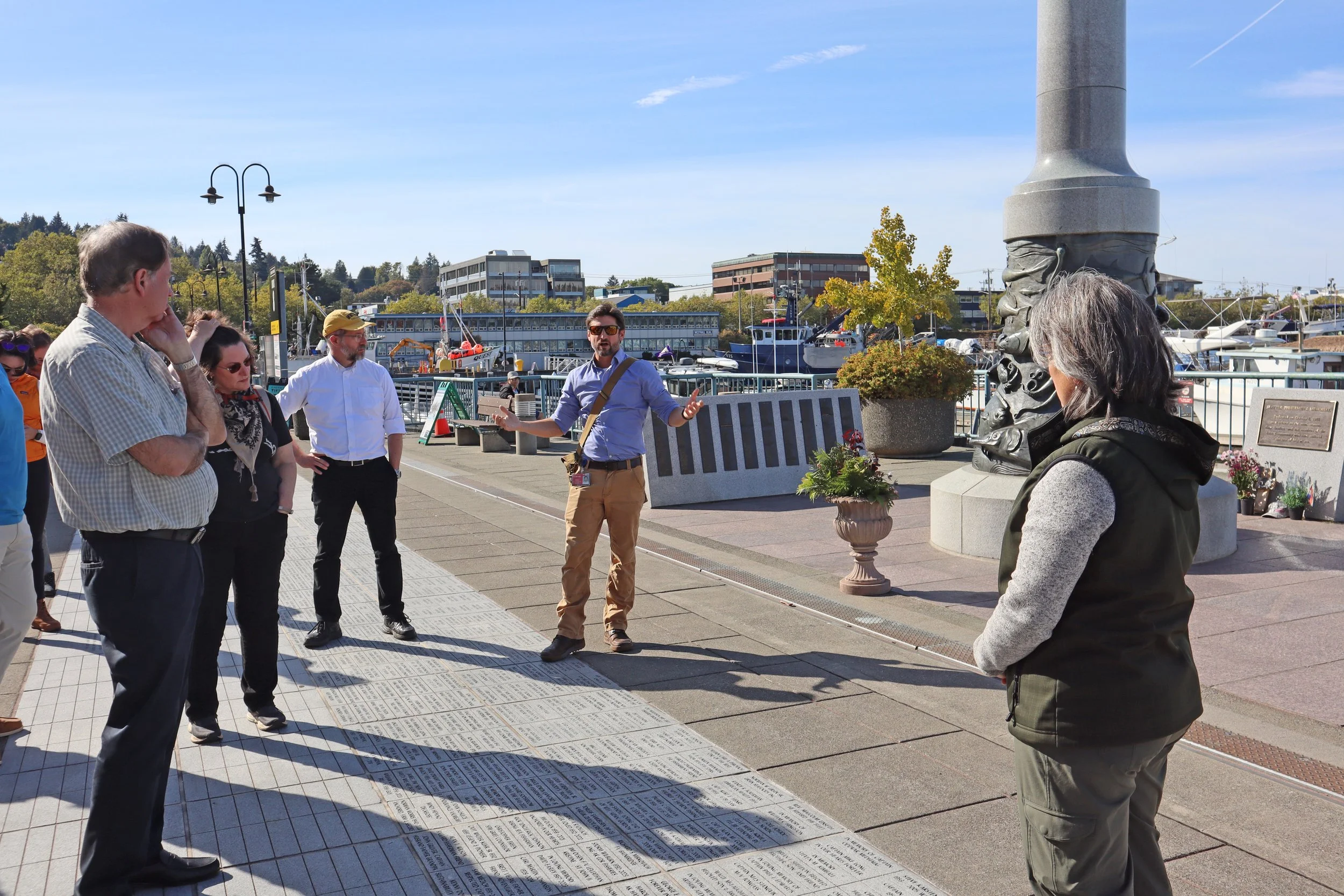
Andy Gregory briefs the delegation on the importance of maritime safety in front of Seattle’s Fishermen’s Memorial.
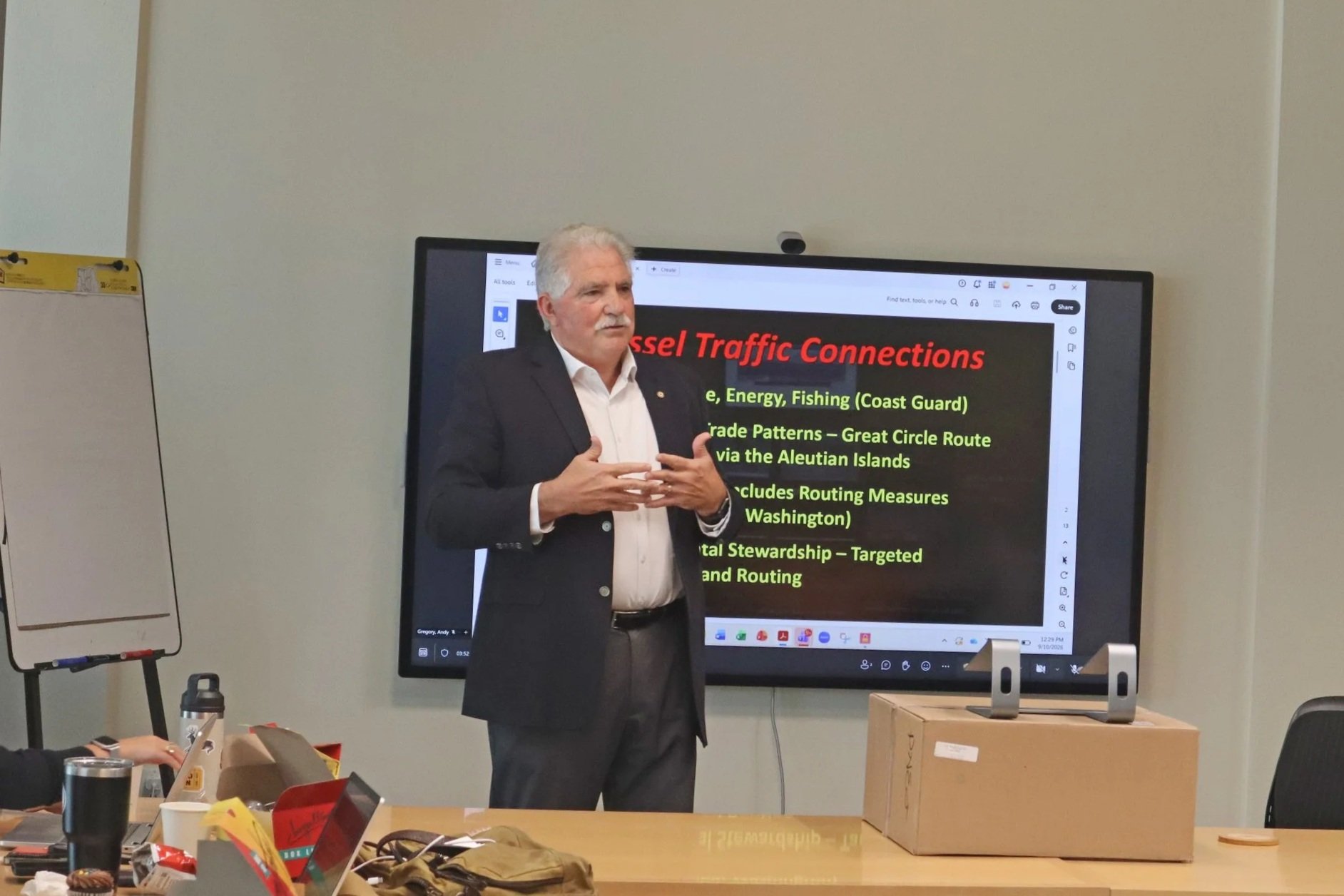
Mike Moore explains the importance of vessel tracking through the Salish Sea.
Future Investments and Partnerships
Maritime Leaders Roundtable
A highlight of the tour was a maritime leaders' roundtable with U.S. Representative Rick Larsen at the Port of Everett, focused on shipbuilding across Washington and Alaska. Industry leaders discussed workforce development, capital investment in maritime infrastructure and shipbuilding, prosperity zone designations, and permitting and regulatory processes. Everett provided a fitting setting for the roundtable. Port leadership has overseen the development of international shipping terminals, an expanded marina and the mixed use Waterfront Place district.
Representative Larsen serves as the Ranking Member of the House Transportation and Infrastructure Committee, alongside three other committee members representing the Pacific Northwest. He highlighted key maritime legislation and the importance of the federal Jones Act in ensuring critical supply chain lifelines to Alaska. He also discussed federal transportation investments he helped secure to support job creation and retention, strengthen trade-related infrastructure and enhance operational safety across the maritime, surface transportation and aviation industries.
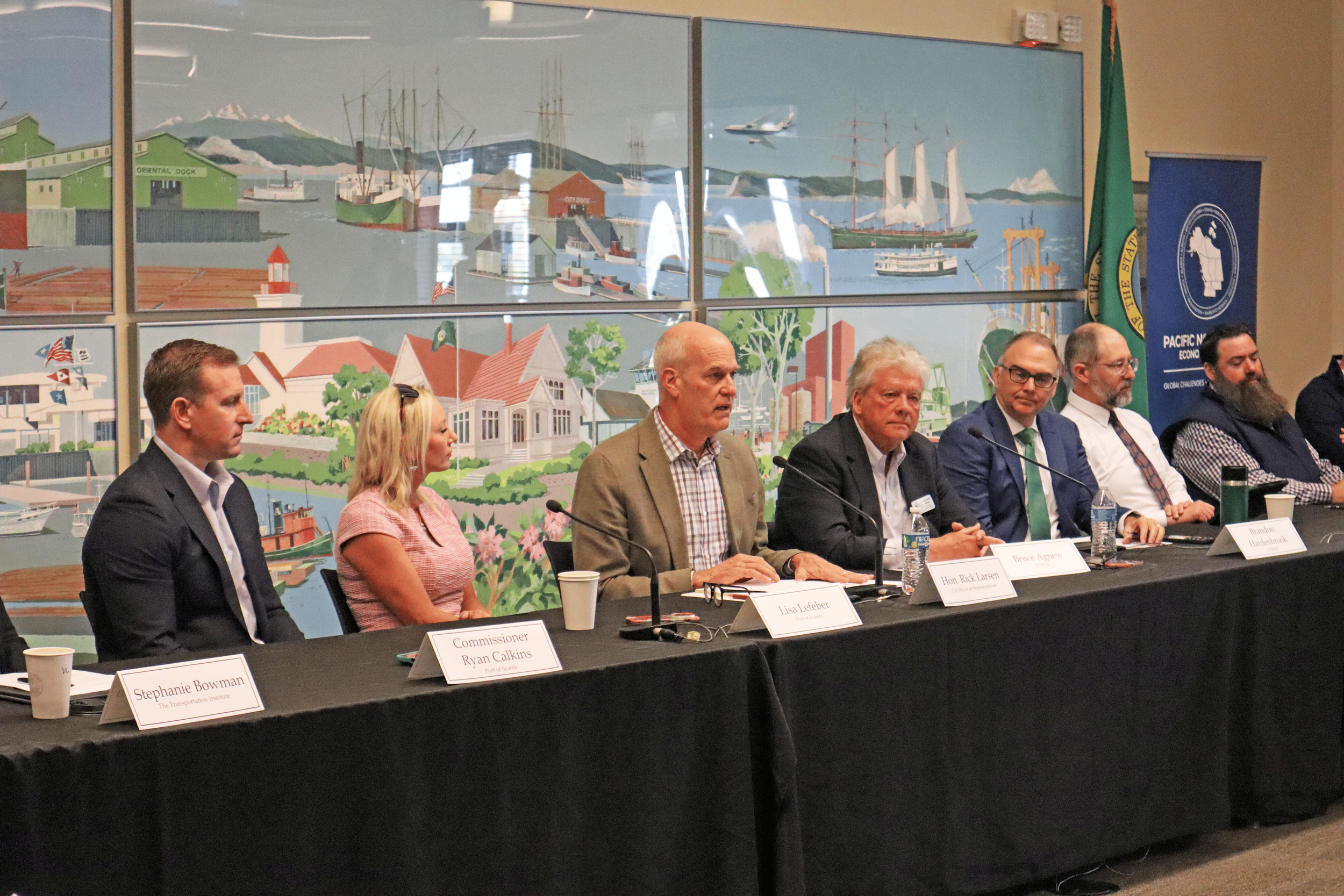
Congressman Rick Larsen discusses his maritime priorities, including shipbuilding, during the Maritime Leaders Roundtable.
Leaders from several of the region’s key shipbuilders shared their perspectives on the issues facing the maritime industry and offered ideas for strengthening the workforce, supporting investment and ensuring the continued growth and competitiveness of the maritime sector.
Tours of shipyards including Vigor Shipyard, All American Marine, Dakota Creek Industries, Everett Ship Repair and Snow & Company provided an up-close look at the industry’s capabilities, opportunities and challenges, adding valuable context to the productive roundtable discussion.
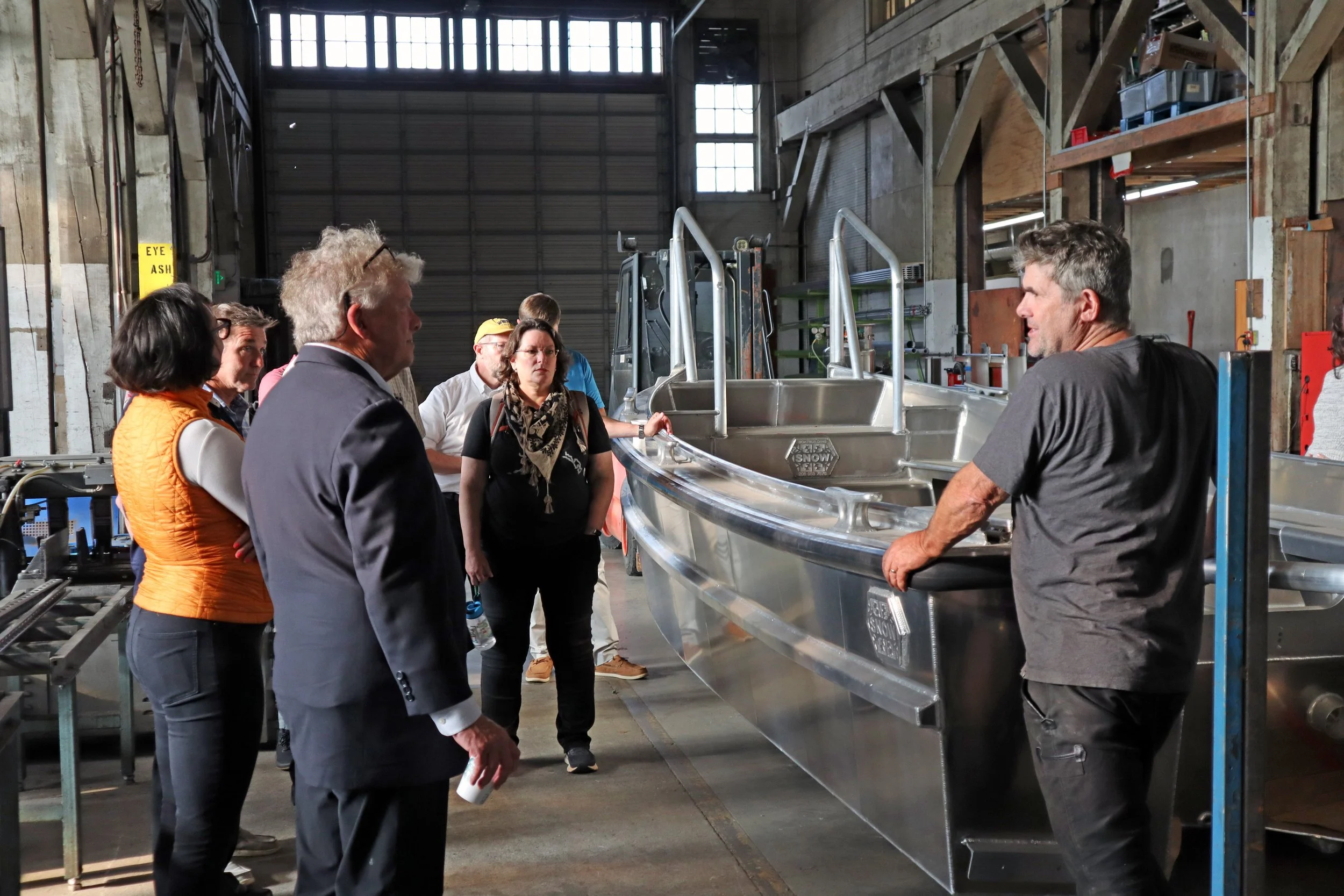
Brett Snow, founder of Snow & Company, leads the delegation on a tour of the company’s Seattle facility.
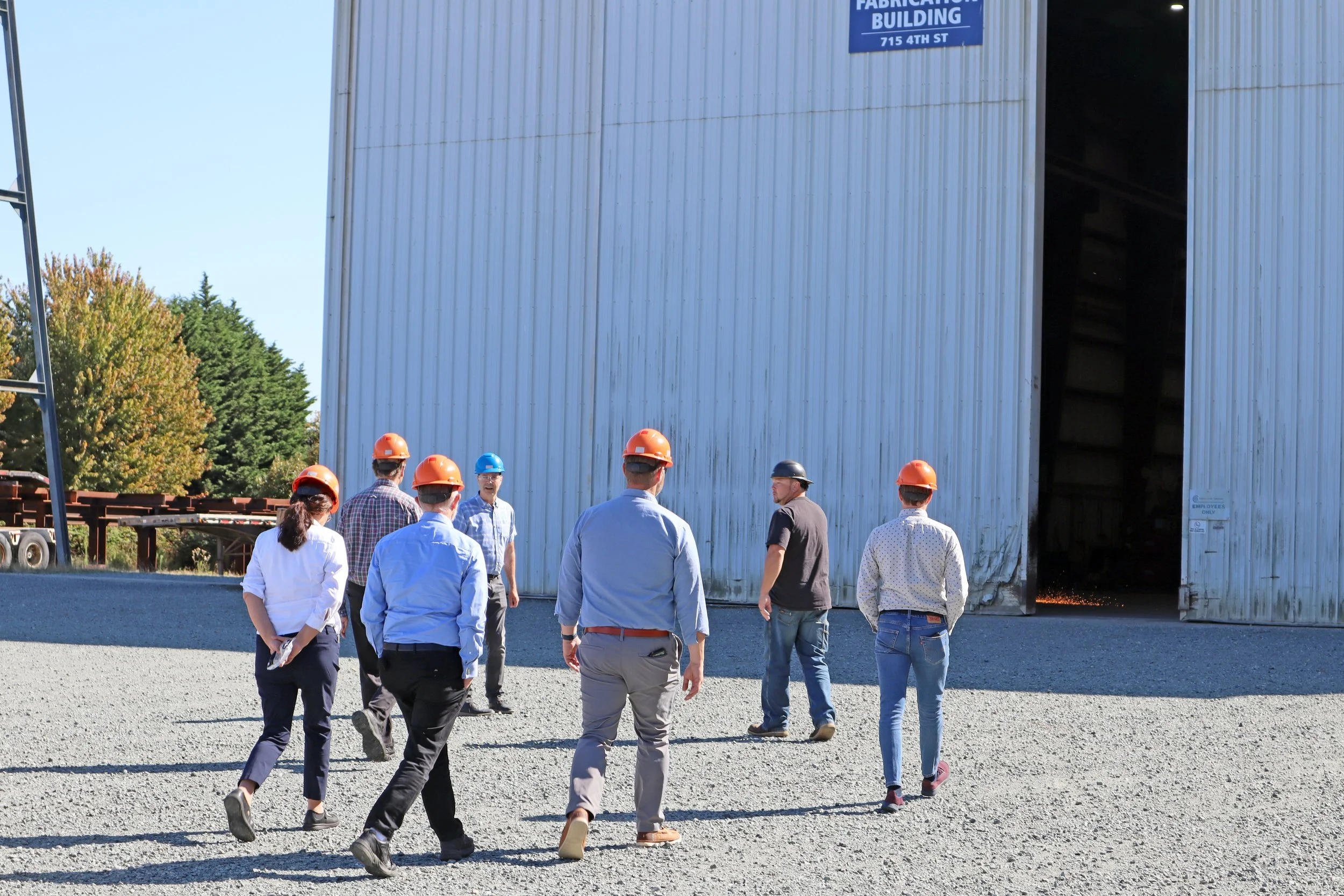
The delegation tours the Dakota Industries facility.
Federal Investments at Work
As Congress develops the next surface transportation bill, discretionary grant programs such as MARAD’s Port Infrastructure Development Program (PIDP) and other USDOT freight and marine transit programs will be critical to helping ports address aging infrastructure, reduce carbon emissions and strengthen maritime operations.
The Alaska-Washington supply chain has benefited from significant PIDP investments, including $4.6 million in 2026 and $50 million in 2024 for the Don Young Port of Alaska’s Modernization Program (PAMP), almost $20 million to Alaska Railroad’s Seward Freight Dock expansion in 2020, and $11.25 million for the Port of Everett’s Pier 3 modernization. Northwest Seaport Alliance terminals and the Port of Bellingham have also received MARAD funding for infrastructure projects such as berthing, electrification and refrigeration projects.
“The entire trip was extremely valuable as I was afforded a unique opportunity to engage one on one with industry leaders, legislators from both states as well as to see firsthand how PNWR is working to connect these individuals and groups to further strengthen our “ties that bind”. I believe the connections I have made through your organization will assist my efforts in Alaska to work with a broader coalition of people to ensure that the Don Young Port of AK is in the forefront of any funding conversations with the federal and state delegations.”
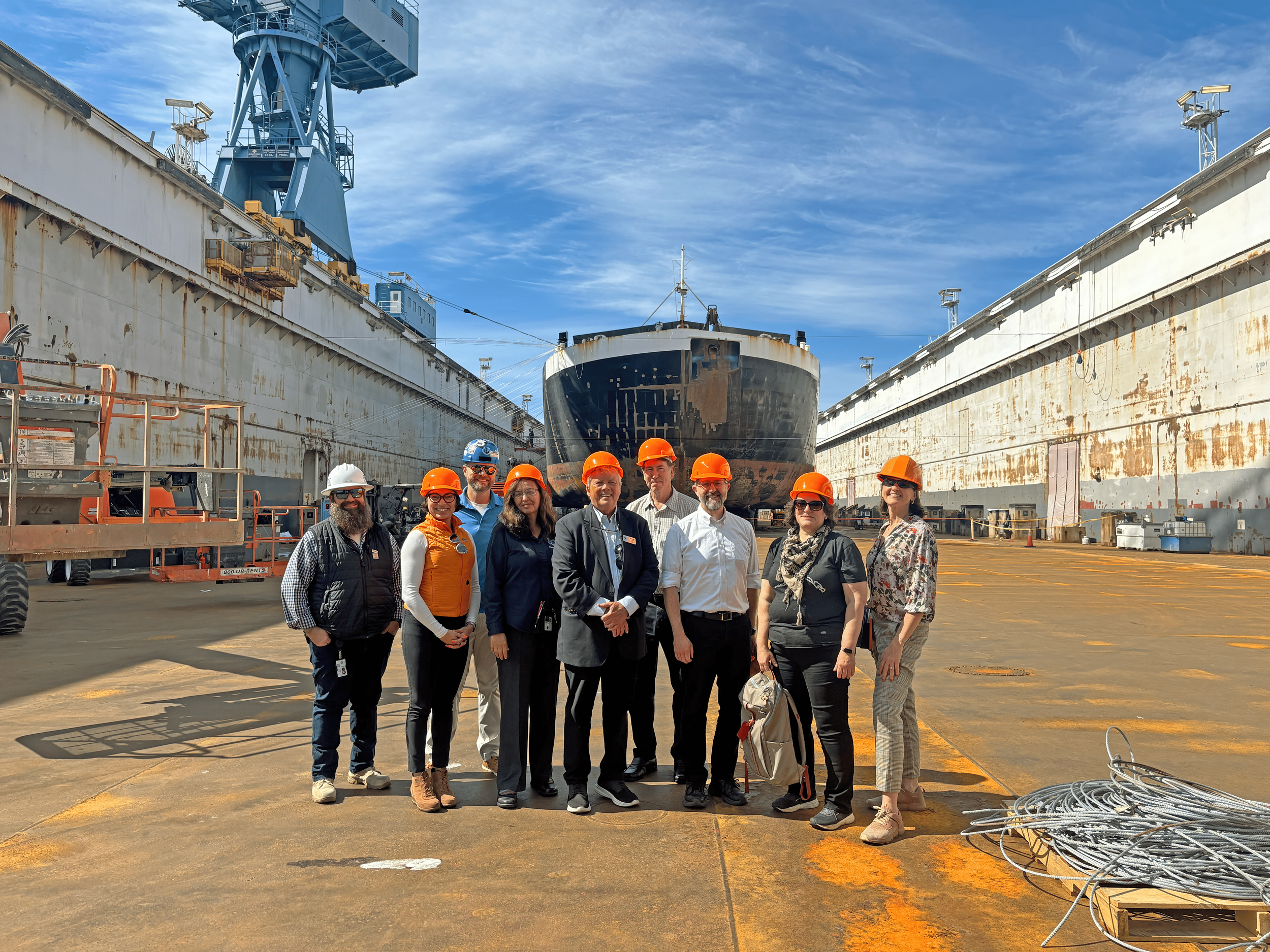
The Alaska delegation stands on a dry dock at Everett Ship Repair.
The Build Northwest Accelerator is a member of the MARAD Alaska Supply Chain Lifeline working group which advocates for innovative financing strategies for critical maritime infrastructure across Alaska and the region. The reciprocal tours also highlight our program areas and align with our broader work plan through the Build America Bureau to apply innovative financing tools and public-private partnerships for multi-state, trade, commerce and travel projects across the Northwest.
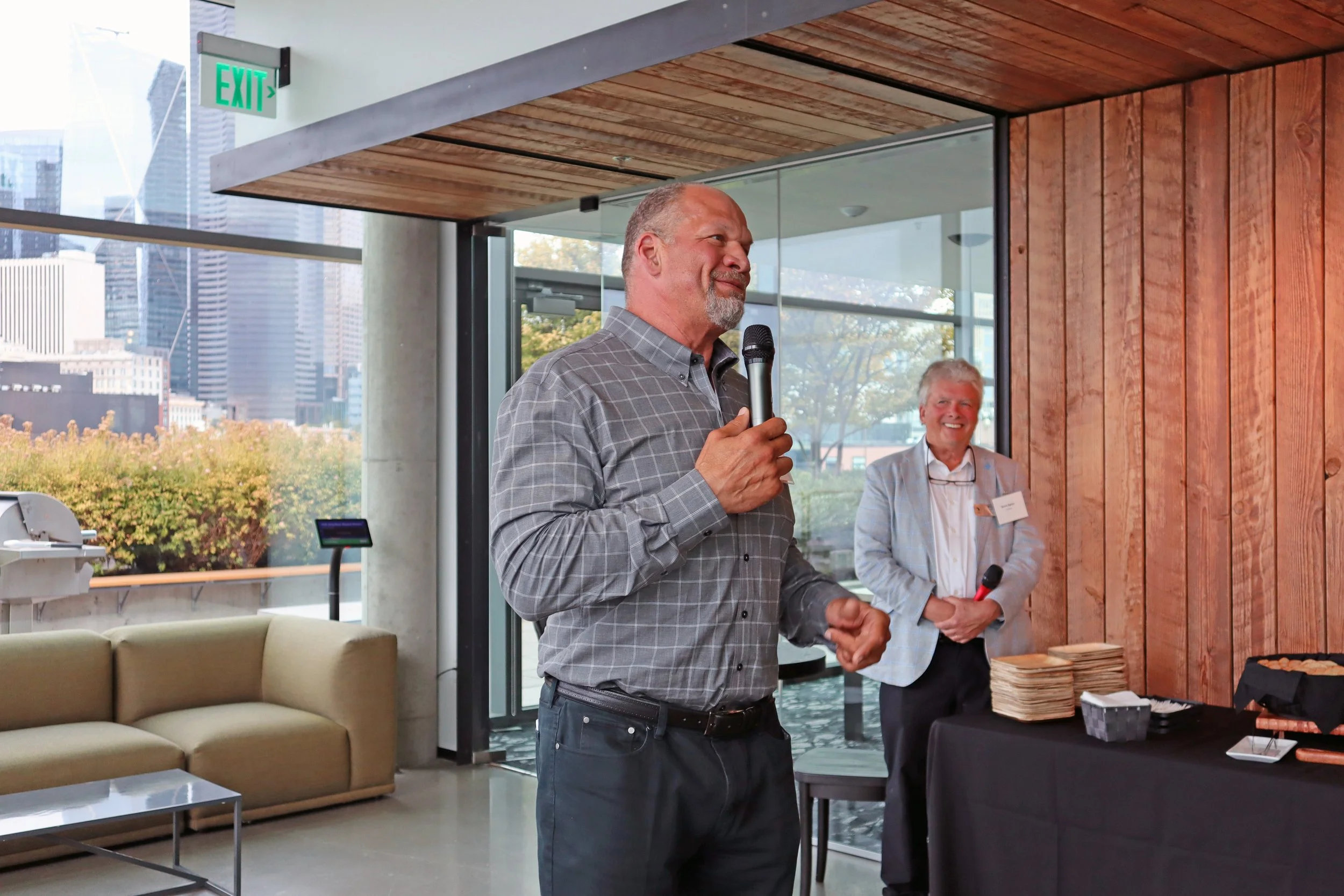
Jason Childs welcomes everyone to the Saltchuk reception.
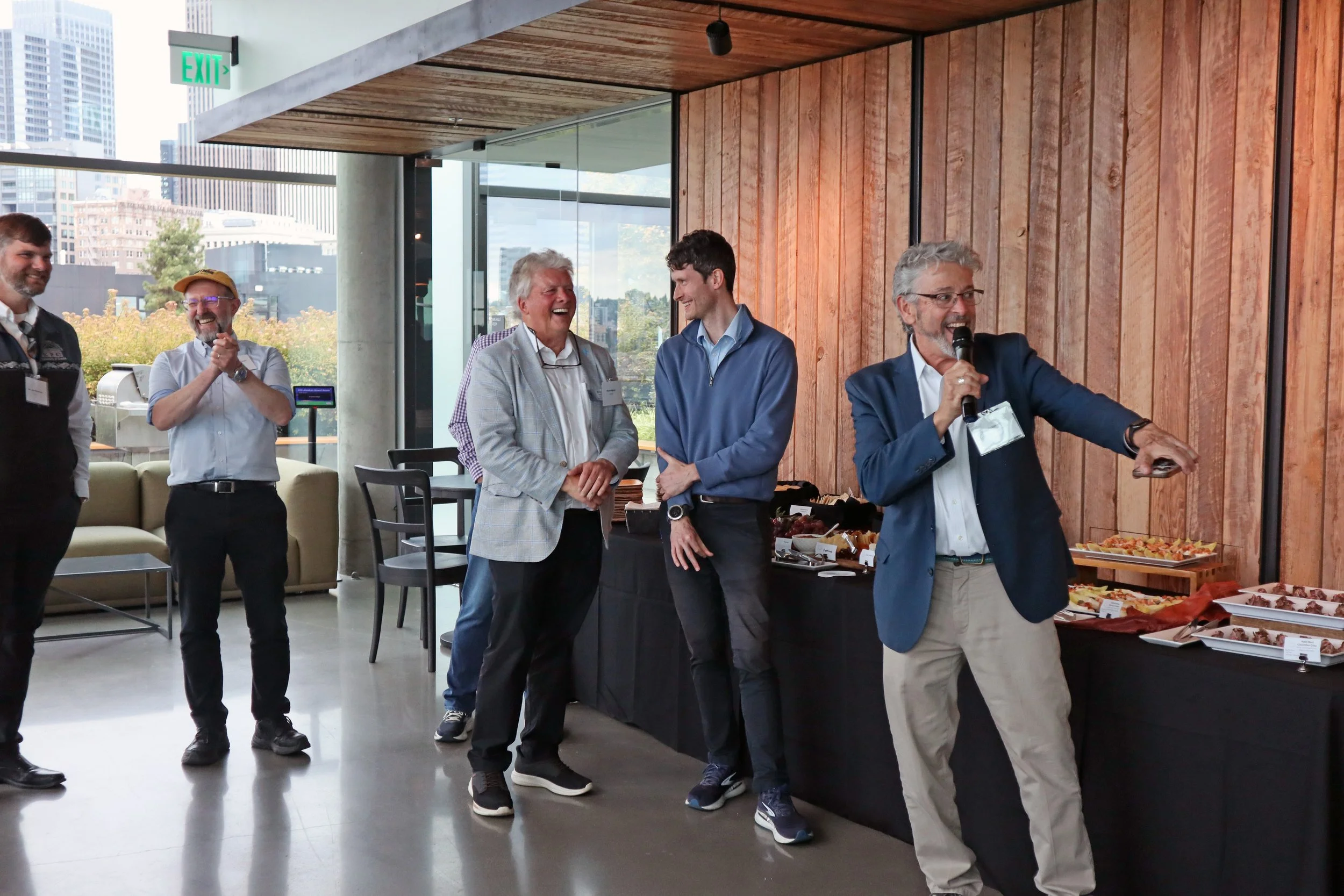
Commissioner Fred Felleman provides remarks during the Saltchuk reception.
A View from the Top
We ended the tour at the Port of Tacoma, where after briefings from NWSA and International Longshore and Warehouse Union leaders, we rose 200 feet to the crane operator’s cab, taking in a dramatic view of the waterfront and the scale of activity across the port. From there, we boarded a Matson cargo ship, where we watched cargo move overhead as we walked through the vessel, giving us a firsthand view of the precision, coordination and infrastructure that keep goods moving through the Pacific Northwest.
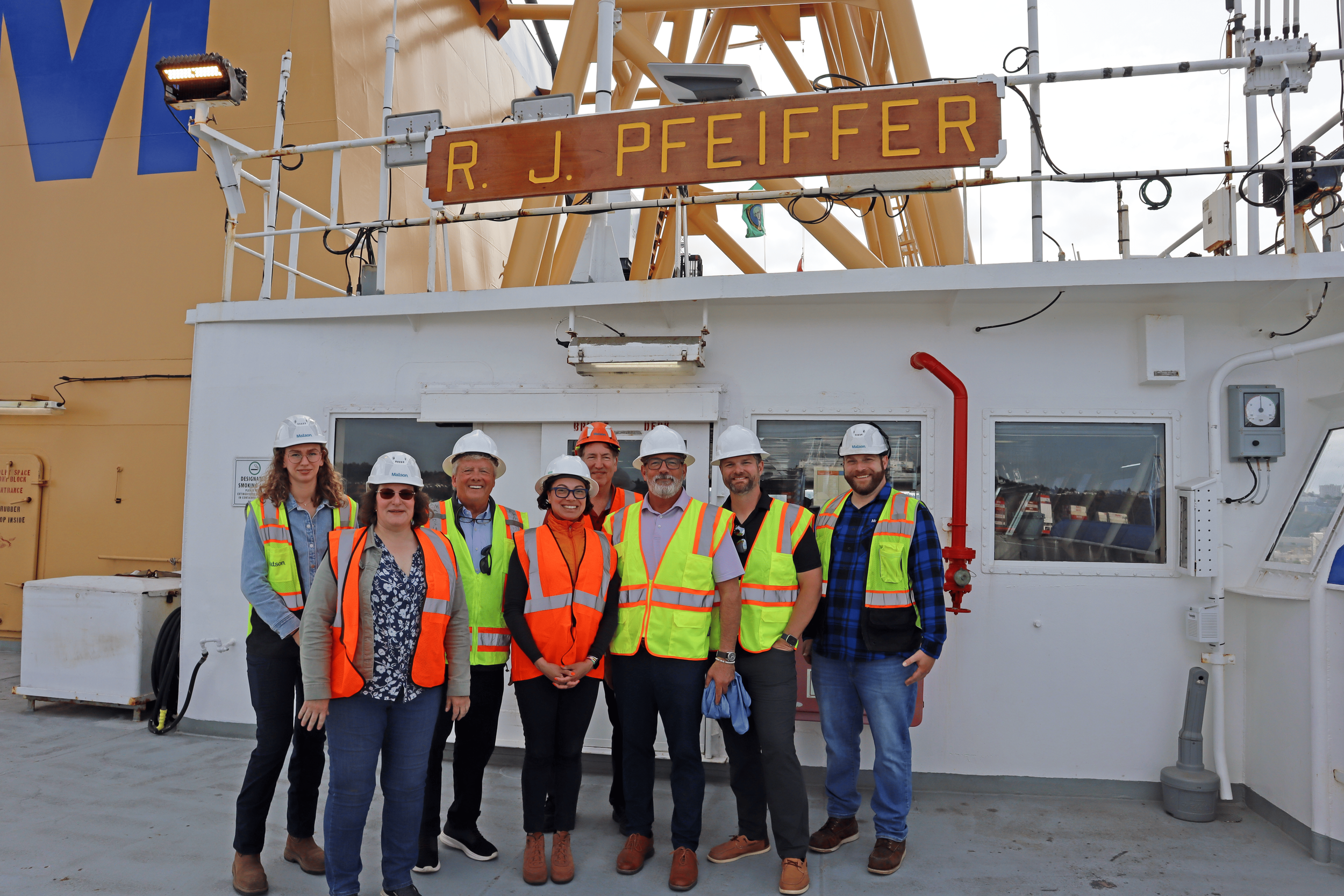
The delegation stands aboard Matson’s R.J. Pfeiffer cargo ship, headed for the Don Young Port of Alaska the following day.
“The ports and shipbuilding trip was fascinating. I’ve long been familiar with the shapes and directions of moving freight in the Pacific Northwest, but these visits were like putting on a new pair of glasses: once-vague concepts and patterns came into sharp focus.
Getting to see the infrastructure and talk with the people who run it brought me to a place where I can work better on the partnerships and opportunities facing Alaska’s maritime economy. I made connections with people who will be key to finding solutions and strengthening partnerships across the region.”
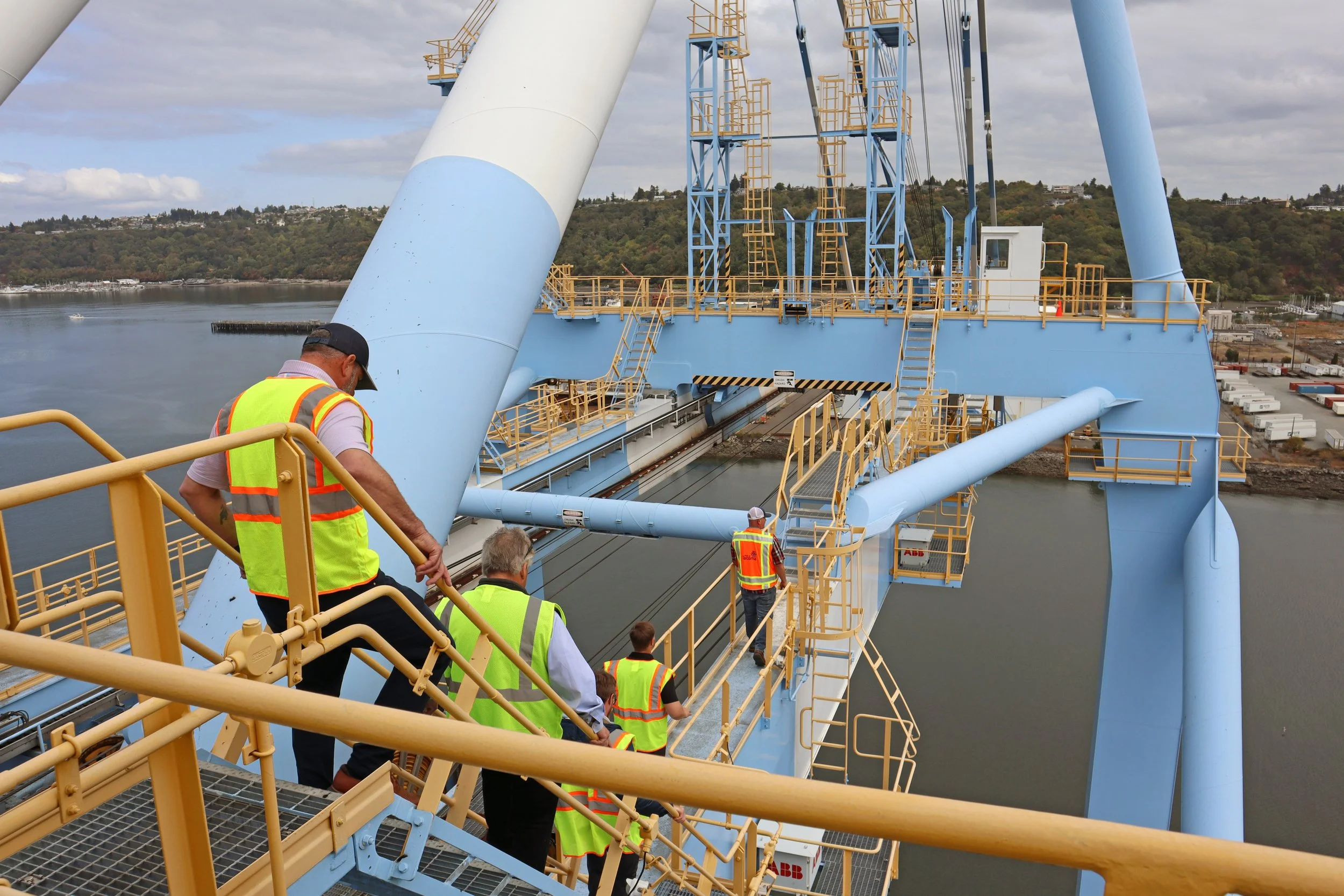
The delegation tours a crane at the Port of Tacoma.
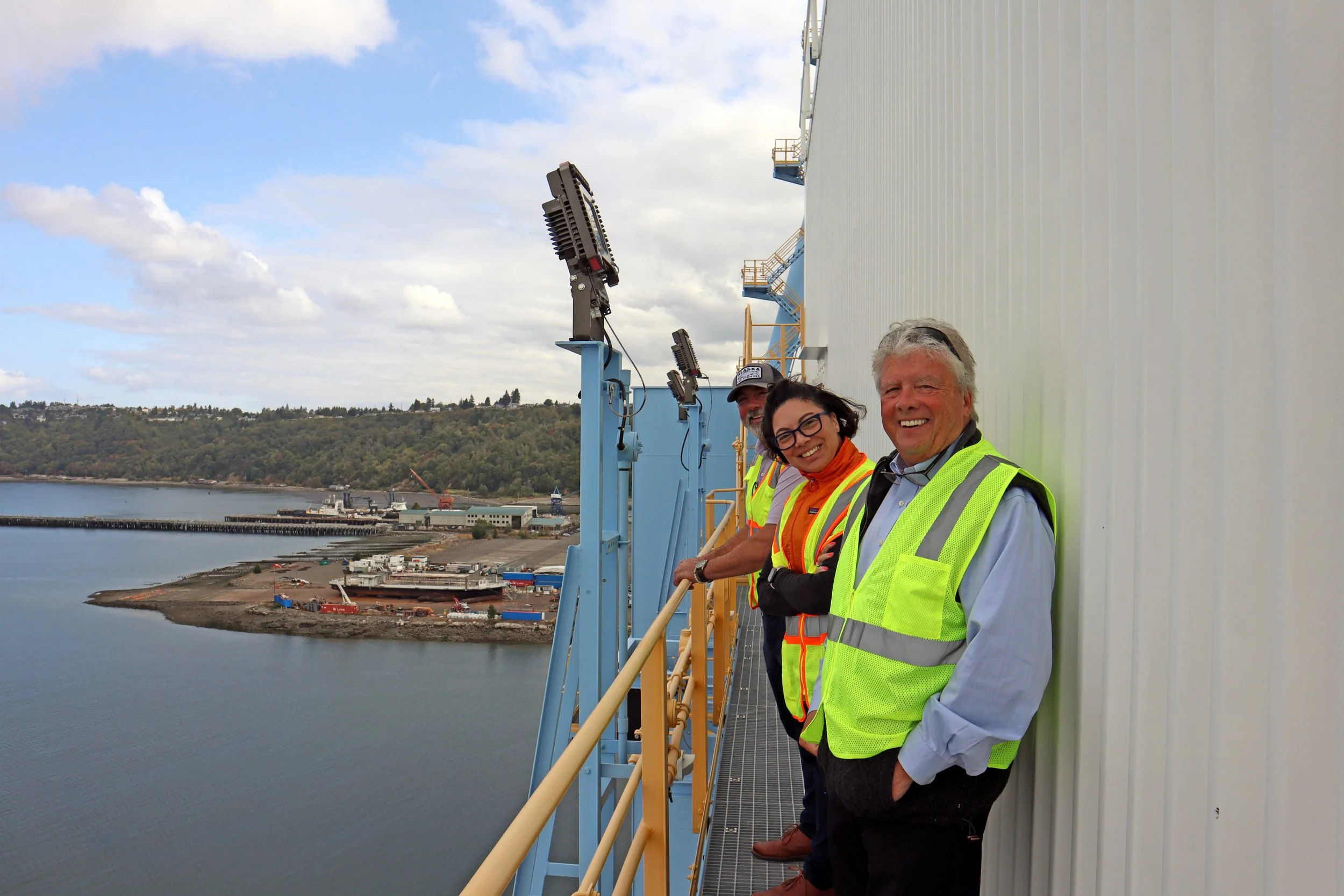
The delegation smiles in front of the East Waterway as cargo ships make their way into Commencement Bay.
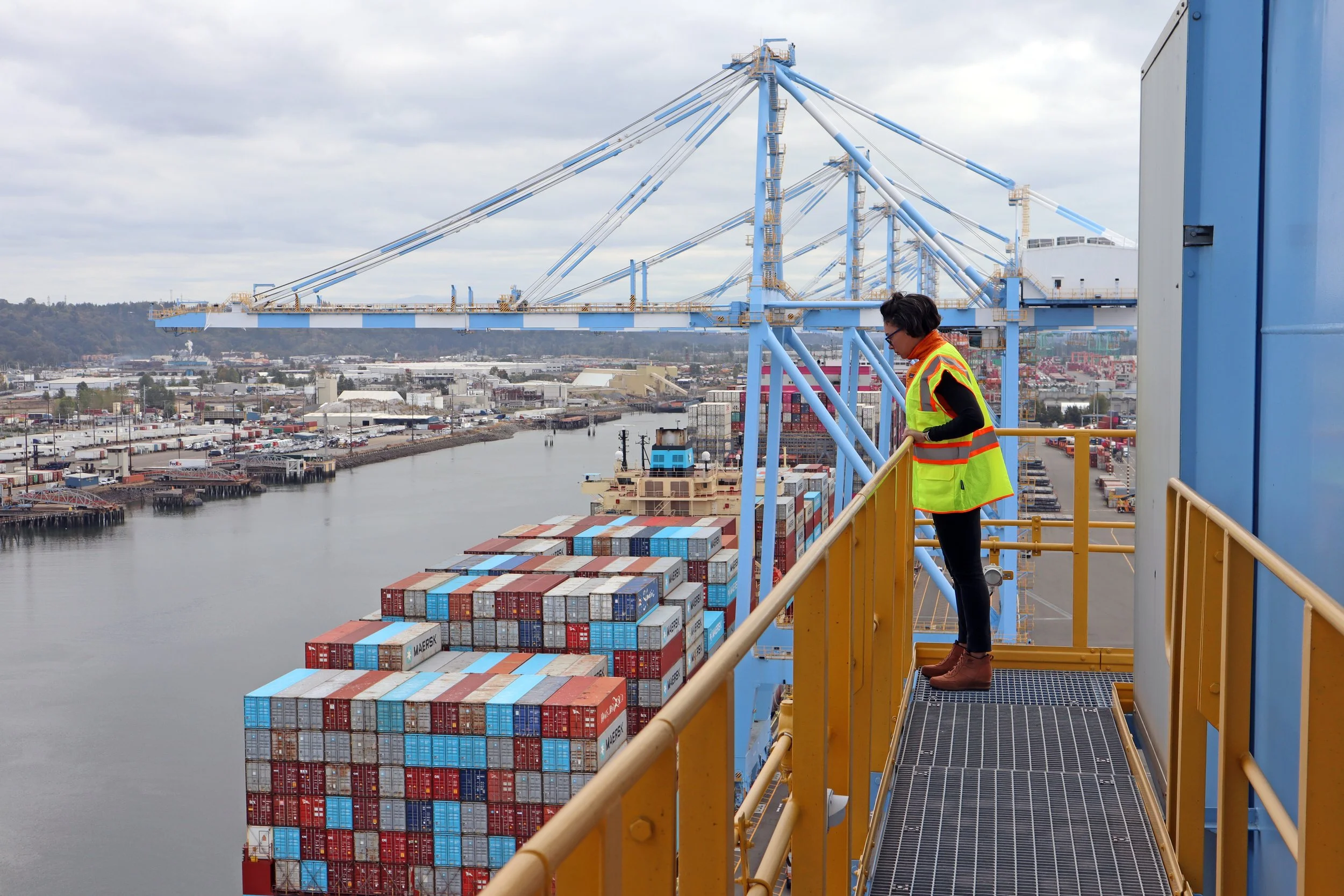
Senator Löki Gale Tobin looks out on the cargo terminal.
As the tour came to a close, the sweeping view of cargo moving across the region by land and water took on a new meaning. What initially appeared to be an immense and complex network of cranes, vessels, rail lines, trucks and terminals became more tangible after seeing firsthand the people, policies and infrastructure that keep these supply chains moving.
As our delegation heads back to Alaska and begins a new legislative session, the lessons from this tour will help inform the work ahead. These are the experiences and connections that turn policy into something tangible—and offer a deeper appreciation for the scale and sophistication of the maritime and transportation systems that connect the Pacific Northwest to Alaska and the world.
A special thank you to our partners for making our trips to Alaska and Washington possible!
Keep in Touch!
Bruce Agnew

Tom Lang
Hannah Meister